HVAC duct safety • Fire-rated penetrations • Replacement supply
Fire Dampers & Curtain-Type Dampers
Source fire dampers for ductwork passing through rated walls and floors. We can help organize quotations for curtain-style static and dynamic dampers, factory-sleeved configurations and replacement assemblies using the manufacturer information and installation requirements you provide.
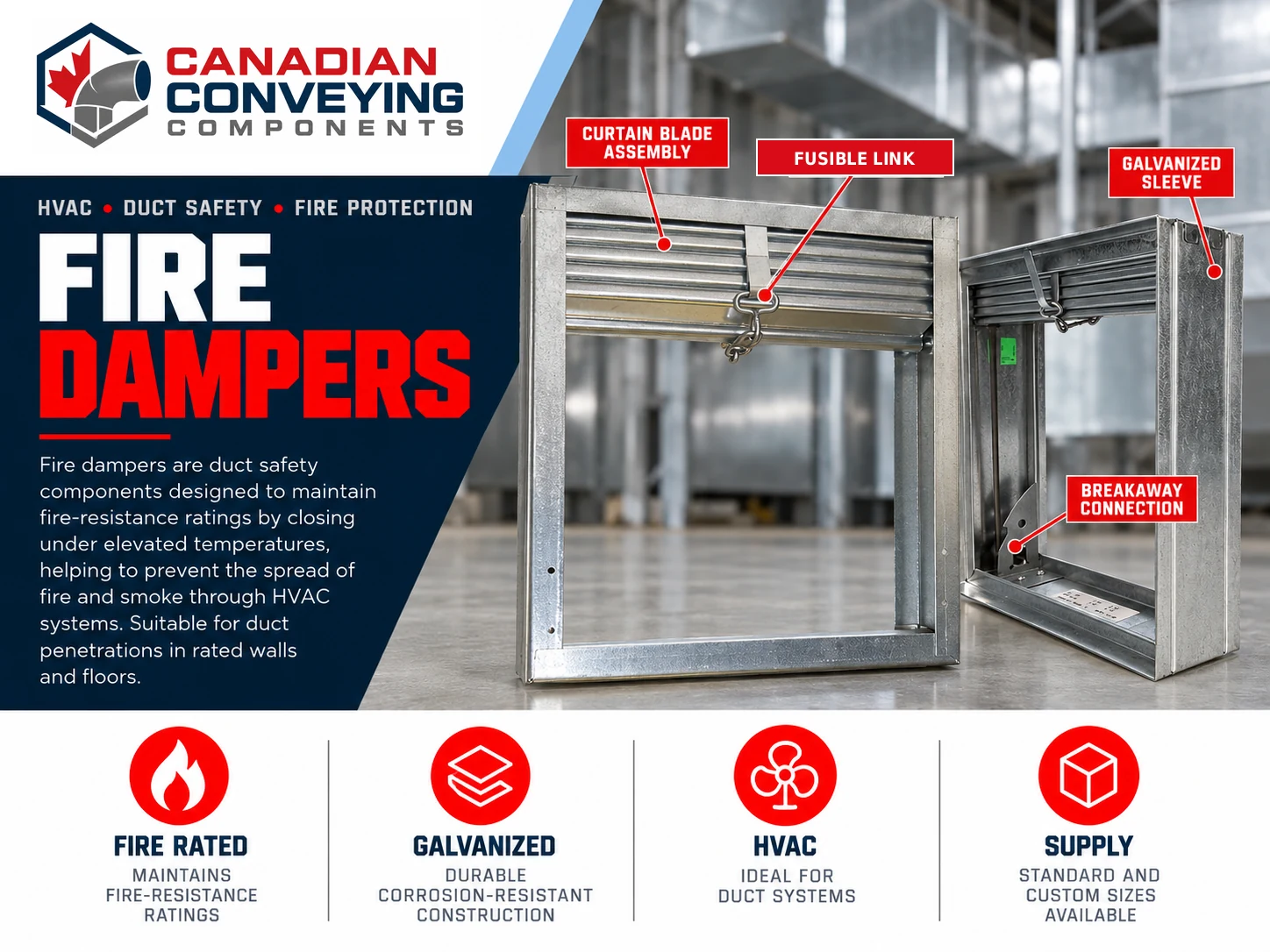
Illustrative examples only. Fire ratings, listings, release temperature, installation orientation and approved assemblies are manufacturer- and model-specific.
Fire damper options for duct penetrations
Fire dampers are life-safety components used to protect the integrity of fire-resistance-rated barriers where ducts pass through them. The correct damper depends on the duct system and approved installation details.
Static curtain fire dampers
Typically considered where the relevant airflow is designed to stop on a fire signal. In curtain designs, folded blades release and drop into the duct opening when activated by the listed heat-responsive mechanism.
- Curtain-blade arrangements
- Various frame styles and duct sizes
- Fusible-link configurations by model
Dynamic fire dampers
Designed and listed for systems where airflow may continue during a fire event, subject to the manufacturer's rated operating conditions and installation limits.
- Dynamic-rated curtain-style models
- Model-specific airflow and pressure limits
- Orientation and size restrictions
Sleeves & installation details
Depending on the approved assembly, supply requirements may include a factory sleeve, retaining angles, approved connections and accessories.
- Sleeved or unsleeved configurations
- Wall and floor penetration applications
- Replacement units and matching documentation
Important distinction: fire dampers are not necessarily smoke dampers.A fire-only damper should not be represented as a listed smoke-control device. Where a design requires both fire and smoke functions, specify an appropriately listed combination fire/smoke damper. The project designer, installer and authority having jurisdiction determine the required listing, configuration, access provisions and compliant installation.
What to include in a fire damper inquiry
A photo of the existing product label, a mechanical schedule, or the required manufacturer model is the best starting point. Providing these details helps avoid substituting an unapproved assembly.
Model, listing & fire rating
Provide the specified manufacturer/model, fire-protection rating and required listing (such as CAN/ULC-S112 where applicable in Canada), together with the project’s approved-equivalent requirements.
Static or dynamic operation
Confirm whether the system is static or dynamic, including design airflow conditions and any manufacturer performance requirements.
Size & orientation
Give the specified duct width and height, location in a wall or floor, horizontal versus vertical installation and any space constraints.
Sleeves & connections
Identify the factory sleeve requirements, length, material/gauge, retaining angles and approved duct connection details where specified.
Release mechanism
Note the specified fusible-link temperature or other listed release arrangement, together with any required inspection or access details.
Quantity & documentation
Provide quantities, destination, schedule and available drawings. Request the manufacturer's current submittal and installation instructions for review.
Fire dampers are regulated life-safety products. Canadian Conveying provides component-sourcing support; we do not certify a design, substitute a listed assembly without approval, or provide compliance approval through an equipment quotation.
Frequently asked questions
Common points to clarify before sourcing a new or replacement fire damper.
What's the difference between static and dynamic fire dampers?
A static fire damper is intended for an approved application in which airflow stops under the relevant fire conditions. A dynamic fire damper is tested/listed for closing with airflow present, within its model-specific limits. Follow the approved project documents and manufacturer's current submittals.
Can you help source a replacement damper?
Yes. Send the existing damper's manufacturer, model, rating/listing label, dimensions and photos, along with installation constraints. Replacement selection must retain the required listings and be reviewed by the responsible project parties.
Do fire dampers also control smoke?
Not automatically. A listed fire damper and a listed smoke damper serve different functions. If smoke leakage control is required, identify the specified smoke or combination fire/smoke rating.
Are 1½-hour and 3-hour options available?
Those are common ratings for certain manufacturer fire damper ranges, but availability varies by model, size, orientation and market. The exact rating must be confirmed against current manufacturer certification and project requirements.
Need a fire damper or replacement assembly?
Send the product schedule, label photo or applicable model and a brief description of the duct penetration. We can help identify sourcing options and obtain supplier documentation for your review.
Manufacturer/model or specified equivalent
Fire rating, listing and static/dynamic requirement
Duct size, mounting orientation and sleeve details
Quantity, location and required submittals
Related ductwork components
Fire dampers can be part of broader HVAC and ventilation component packages. Browse related categories or send a combined inquiry.