Replacement-part and shutdown lists
Provide part numbers, equipment tags, quantities and the maintenance deadline. Highlight the critical items so supplier lead times and acceptable alternatives can be reviewed.
Buying replacement parts for a shutdown, maintenance job or bulk-handling modification? Canadian Conveying helps consolidate bills of materials and purchasing lists for conveying pipe, couplings, valves, filters, blowers and fabricated fittings. We coordinate supplier input, product identification and component quotations—not a substitute for independent engineering or installation.
For multi-item requests, a structured parts list reduces avoidable questions and makes supplier comparisons easier.
Provide part numbers, equipment tags, quantities and the maintenance deadline. Highlight the critical items so supplier lead times and acceptable alternatives can be reviewed.
Combine drawings or schedules for pipe sections, elbows, clamps, rotary airlocks, dust collector filters, diverters and connection hardware. We can coordinate component-level quotations.
Include sketches or connection drawings for reducers, adapter plates, flanges and spool pieces needed to mate standard equipment to the existing system. Fabrication details are confirmed before purchase.
A practical sourcing process for single replacements and coordinated equipment orders.
Send a part number, photo, drawing or specification. We clarify the details needed to approach suitable suppliers.
Compare the proposed product, quantity, pricing, freight and available lead time before approving your order.
Once the order is confirmed, we coordinate supplier fulfilment and shipping, and keep the part details available for repeat inquiries.
We gather specifications and supplier information into a clearer purchasing decision. This can help catch missing connection details, identify proposed substitutions and keep components and accessories together in the quotation.
These details help suppliers confirm product options and prepare a quotation. Send what you already have; we can follow up on missing information.
The component needed, its role, existing part references and whether you require a direct replacement or a proposed alternative.
Bulk density, particle size, abrasive/sticky/friable properties, moisture, temperature, desired flow rate, current capacity issue and duty cycle.
Where the process starts and ends, source equipment, destination equipment, horizontal run, vertical lift, number of bends, routing and available space.
Rotary valve openings, flange sizes, bolt patterns, hopper outlet dimensions, pipe OD, coupling style, line standard and available height.
Bin, silo or hopper style, working capacity, refill frequency, discharge arrangement, high-level and low-level indication needs, sensor mounting location, dust conditions and desired signal or control output.
Shipping address, receiving hours, unloading arrangements, shutdown timing and any delivery constraints for your purchasing team.
Quantity, target delivery, shipping location, supplier preference, spare-parts needs and documentation requirements.
Explore related product guides for specifications and details to include with your inquiry.
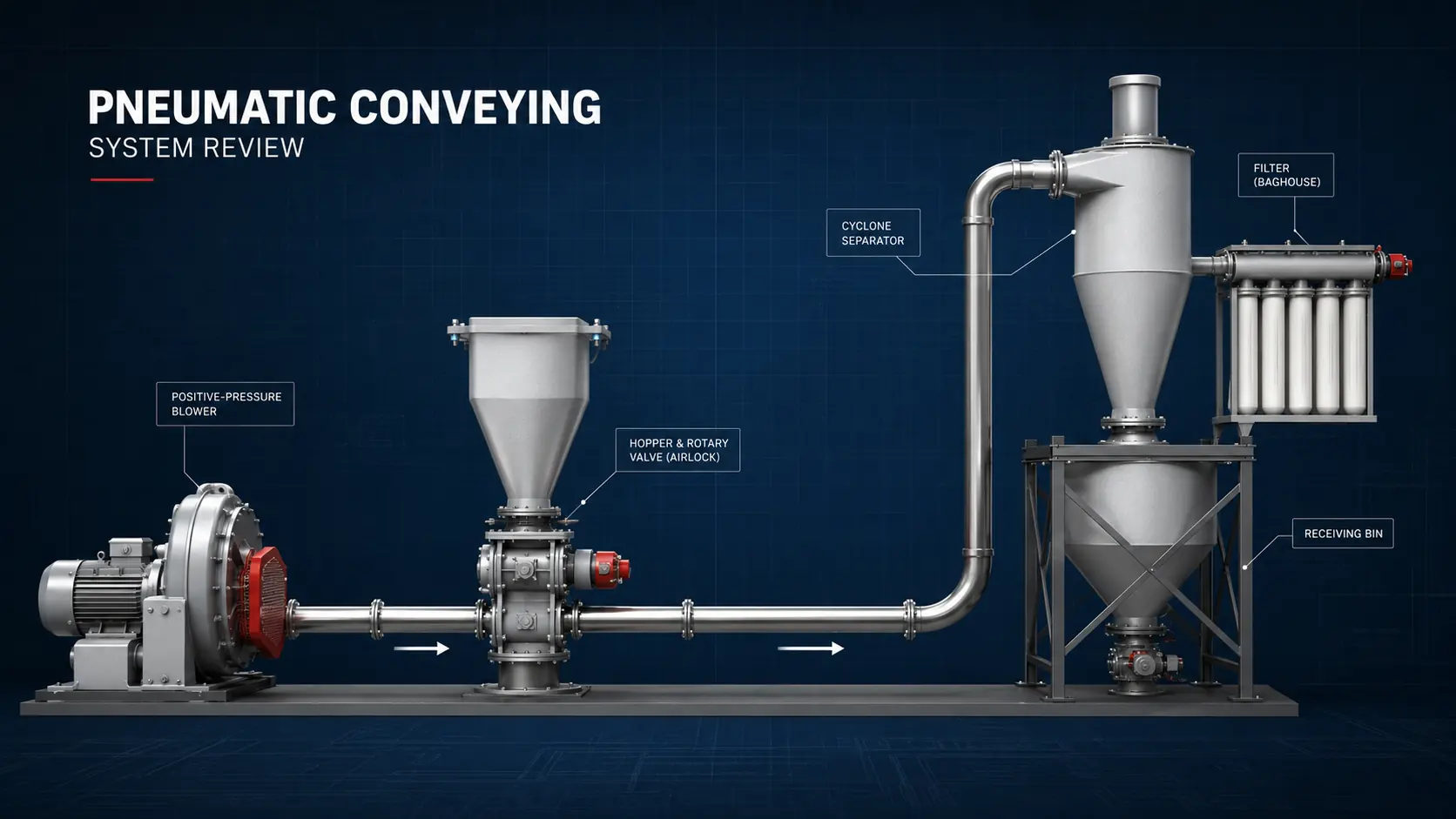
Coordinated sourcing for a specified list of conveying components.
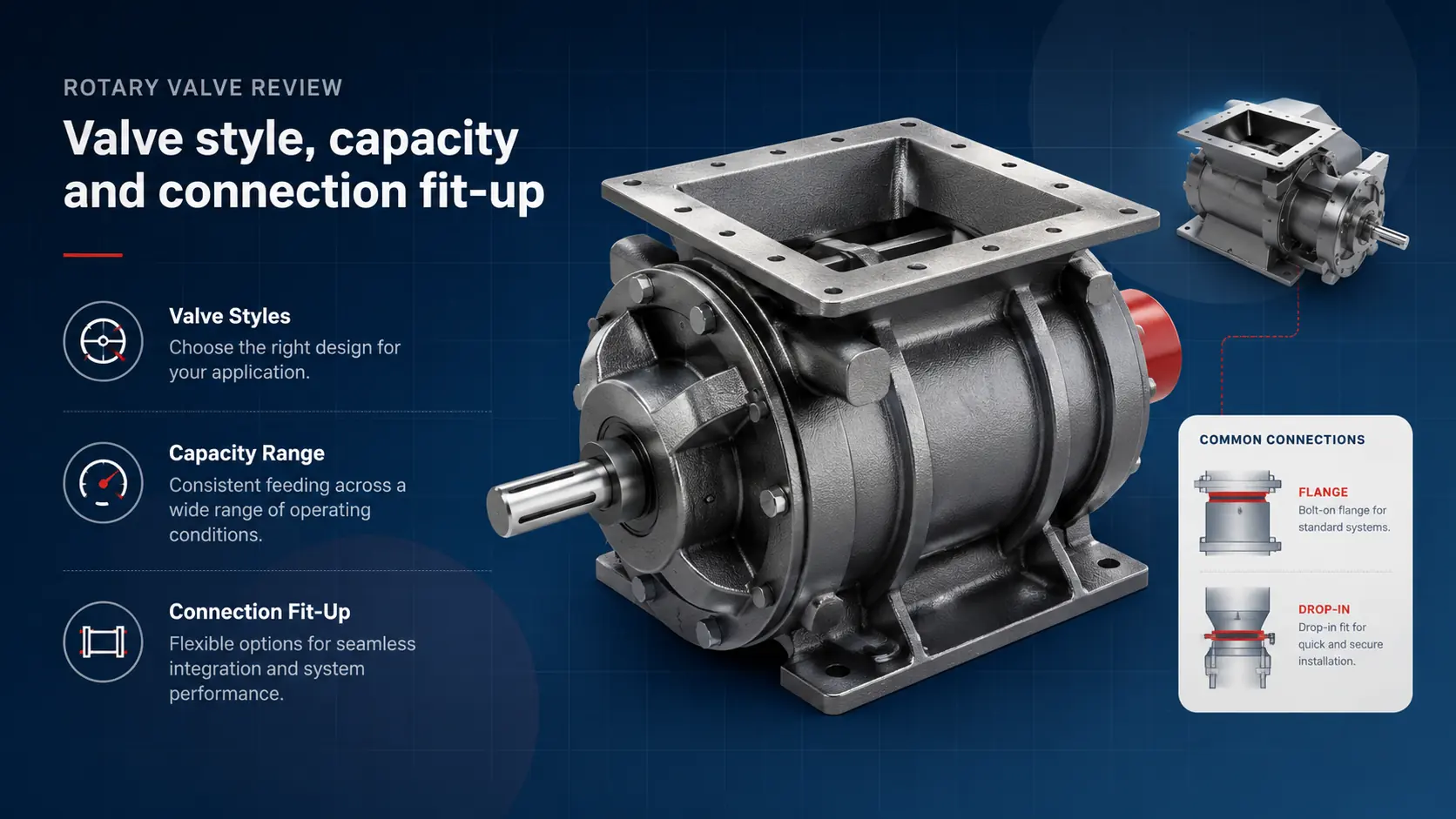
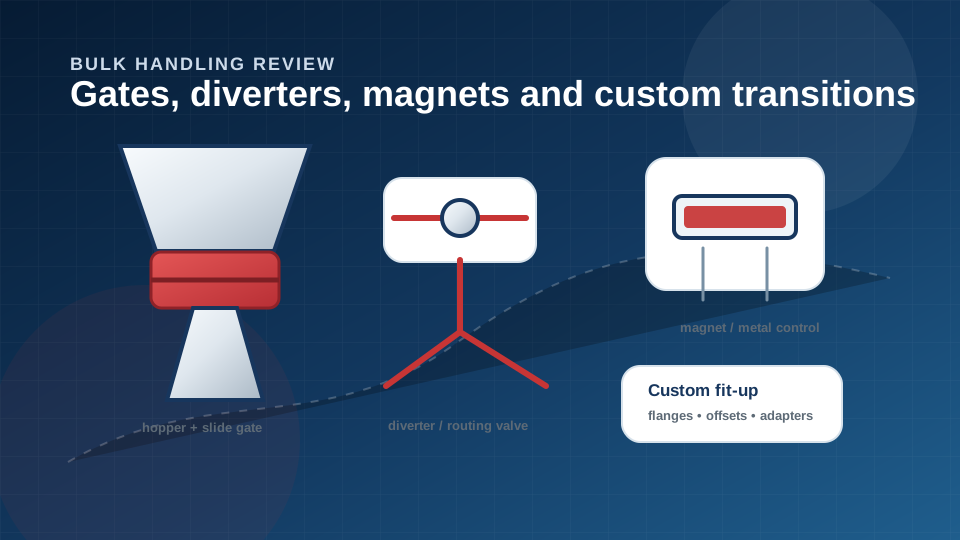
Good for photos, failed parts, odd transitions and unclear product categories.
We help clarify part specifications, gather supplier information, identify proposed alternatives and coordinate supply quotations. Your facility or appointed engineering provider remains responsible for complete system design.
The proposed product and quantity, pricing, available lead time and freight details are set out in the quotation. Availability and any outstanding specification checks are confirmed before ordering.
Our focus is sourcing and supplying components. We coordinate product questions with suppliers; complete system design, installation and performance verification are outside a standard supply quotation.
You can send one consolidated request for multiple conveying, filtering and bulk-handling components. We can investigate supplier options and organize a quotation or set of quotations around the requested parts and delivery constraints; sourcing and lead times depend on the items involved.
Send the part details you have, quantity and delivery location. Email photos, drawings or nameplates to sales@canadianconveying.ca.