Combustible dust • Passive flap isolation • Component sourcing
Explosion Isolation Valves & Passive Flap Valves
Source passive flap-type explosion isolation valves for specified combustible-dust systems, including dust collectors, filters, cyclones and connecting ductwork. Canadian Conveying helps coordinate manufacturer quotations based on your existing equipment, project design criteria and required documentation.
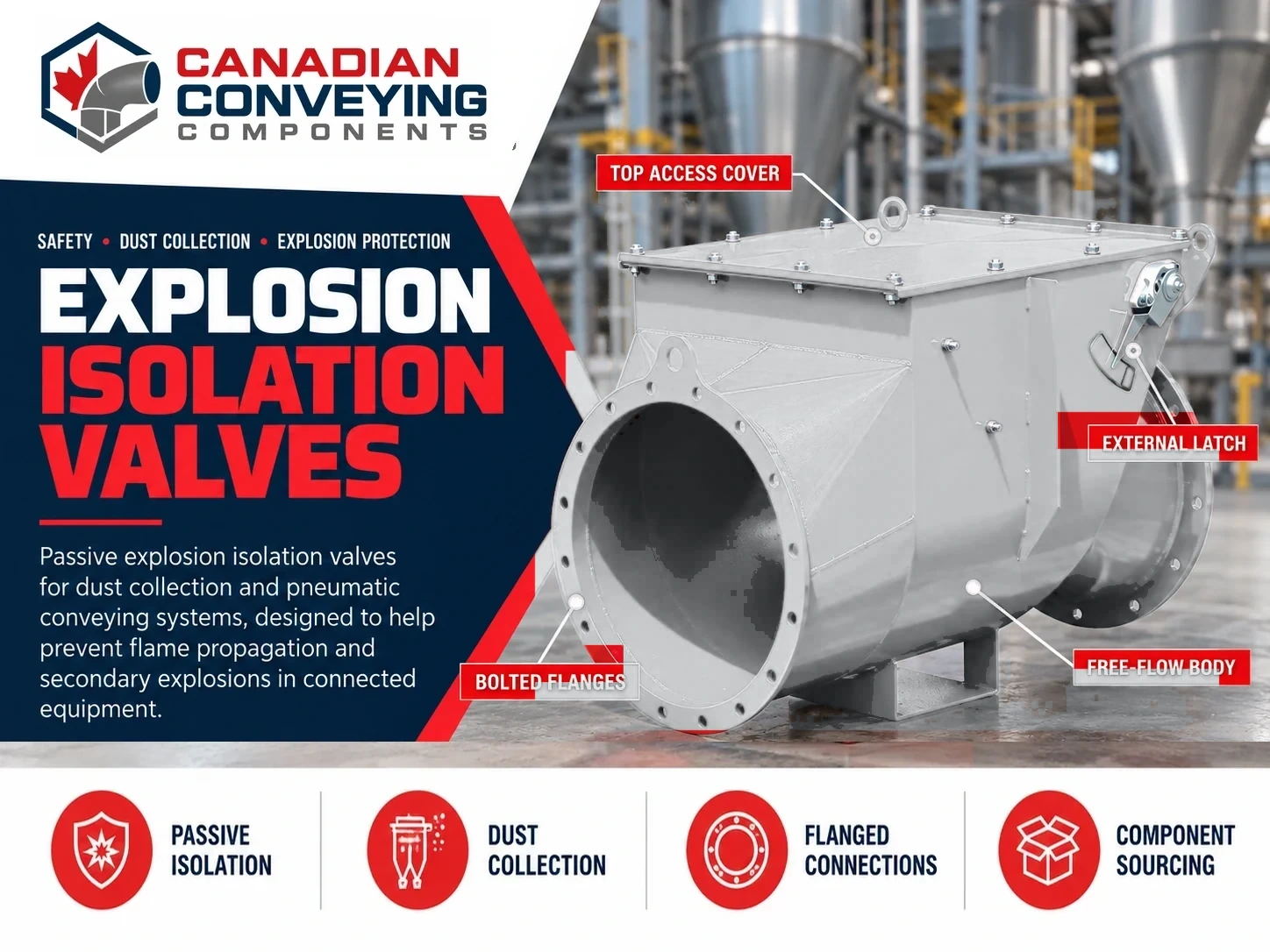
Illustrative valve rendering, inspired by a common passive flap configuration. Product geometry, certified performance, mounting orientation and installation limits depend on the actual manufacturer and model.
Passive explosion isolation for connected ductwork
In combustible-dust systems, an appropriately selected and installed explosion isolation device can help limit flame and pressure propagation through connected ducts. Passive flap valves are one potential element of a documented explosion-protection strategy.
Passive flap-type valves
Flap-style isolation devices are designed to respond to the pressure effects of a deflagration, closing and locking as specified by the manufacturer for their evaluated conditions.
- Manufacturer-specific flap and latch mechanisms
- Dust collection and related process duct applications
- Performance subject to model ratings and documented limits
Flanged valve assemblies
Equipment may include a welded housing, round duct flanges, top access panel and external closing or locking mechanism. Exact features depend on the specified model.
- Nominal sizes and flange arrangements
- Pressure, temperature and airflow considerations
- Manufacturer-required access and maintenance clearances
Replacement & project supply
We can help identify quotation options for an existing valve or a project-specified product, with the manufacturer submittals needed for technical review.
- Model identification from labels and photos
- Drawing and specification-based inquiries
- Availability and accessories subject to supplier confirmation
Safety-critical equipment: selection must follow the engineered protection design.Explosion isolation valves are not universal drop-in replacements. Suitability depends on the combustible dust properties, protected equipment design, pressure conditions, valve location and permitted mounting distances, orientation and certification. The responsible qualified designer, equipment manufacturer and applicable authority must confirm the specified protection scheme. A component quotation is not an engineering approval or certification.
What to provide for an explosion isolation valve quote
A manufacturer model number or an engineered equipment specification is the best starting point. Send available information rather than estimating safety-critical ratings.
Equipment & application
Identify the connected equipment, such as a dust collector, cyclone or filter, and whether the request is for new equipment or an existing valve replacement.
Dust hazard & protection basis
Provide the documented combustible-dust test data or engineered design criteria, such as Kst, Pmax and allowable reduced pressure (Pred), where applicable.
Diameter & flanges
Include duct size, existing flange dimensions and drilling, connection details, duct material and available installation space.
Airflow & operating conditions
State airflow direction and design velocity, positive or negative operating pressure, temperature and whether the installation is on the clean- or dust-laden-air side.
Orientation & mounting location
Supply a sketch with the distance to the protected equipment, elbows, transitions and intended valve orientation. Approved distances and positions are model-specific.
Manufacturer & documentation
Provide preferred or existing make/model, quantity, destination, required certification and available submittal documents. Confirm sensor, reset and inspection requirements if specified.
For a replacement, photos of the identification label, valve body and duct layout are especially helpful. Any proposed substitution should be evaluated and approved by the responsible design team.
Frequently asked questions
Common distinctions and practical information for industrial component inquiries.
What does a passive explosion isolation flap valve do?
In a suitable evaluated application, it helps block the propagation of a deflagration through connected ductwork by closing during an explosion event. Operation, reset, allowable process conditions and protection limits depend on the manufacturer and exact model.
Does an isolation valve replace explosion venting or suppression?
No. Explosion isolation addresses propagation between connected equipment; it does not by itself provide complete protection for a dust collector or vessel. Isolation, venting, suppression and other measures must be evaluated as a coordinated system.
Can it be installed immediately beside a dust collector?
Not without verifying the approved configuration. Manufacturer testing, size and application determine minimum and maximum mounting distances, allowable orientations, duct geometry and other constraints. The installation must follow the approved design and manufacturer instructions.
Is this the same as a conventional fire damper?
No. Explosion isolation valves are evaluated for combustible-dust deflagration propagation in process ducts. Fire dampers address fire-rated building penetrations and have different performance and listing requirements.
Can Canadian Conveying quote an existing model?
Send the manufacturer and model, nameplate photographs, duct dimensions, location, dust hazard design criteria and required documentation. We can help coordinate an inquiry; supply availability and suitability must be confirmed.
Need an explosion isolation valve quotation?
Send a valve nameplate, manufacturer drawing or engineered specification. We can help review the supply request and contact appropriate component sources for available options and documentation.
Existing make/model or specified approved product
Duct diameter, flanges and installation layout
Documented dust hazard and protection requirements
Quantity, destination and submittal requirements
Related dust collection components
Explore adjacent equipment and components that may appear in the same industrial ductwork or dust collection project. Fire dampers have a different safety function and are listed here for comparison, not substitution.