How does clamp-together ductwork differ from pneumatic conveying pipe?
Clamp-together ductwork is commonly used for dust collection, fume extraction and industrial air handling, often under negative pressure. Pneumatic conveying lines may operate under different pressures and product-loading conditions. Similar-looking rolled ends are not necessarily interchangeable: actual outside diameter, lip profile, clamp and seal design, and operating duty all need to match.
Can I use components from a different ducting system?
Possibly, but compatibility must be confirmed before ordering. Provide the actual diameter, rolled-edge profile, existing clamp style, material and operating conditions. Photos of the current joint and a sample part number are especially helpful.
Can I order matching clamps, O-rings and seals?
Yes, we can review supply options for the joining hardware as part of your inquiry. Share the duct diameter, end profile and any gasket material requirements so the clamp and seal can be matched to the components.
What fittings can you help source?
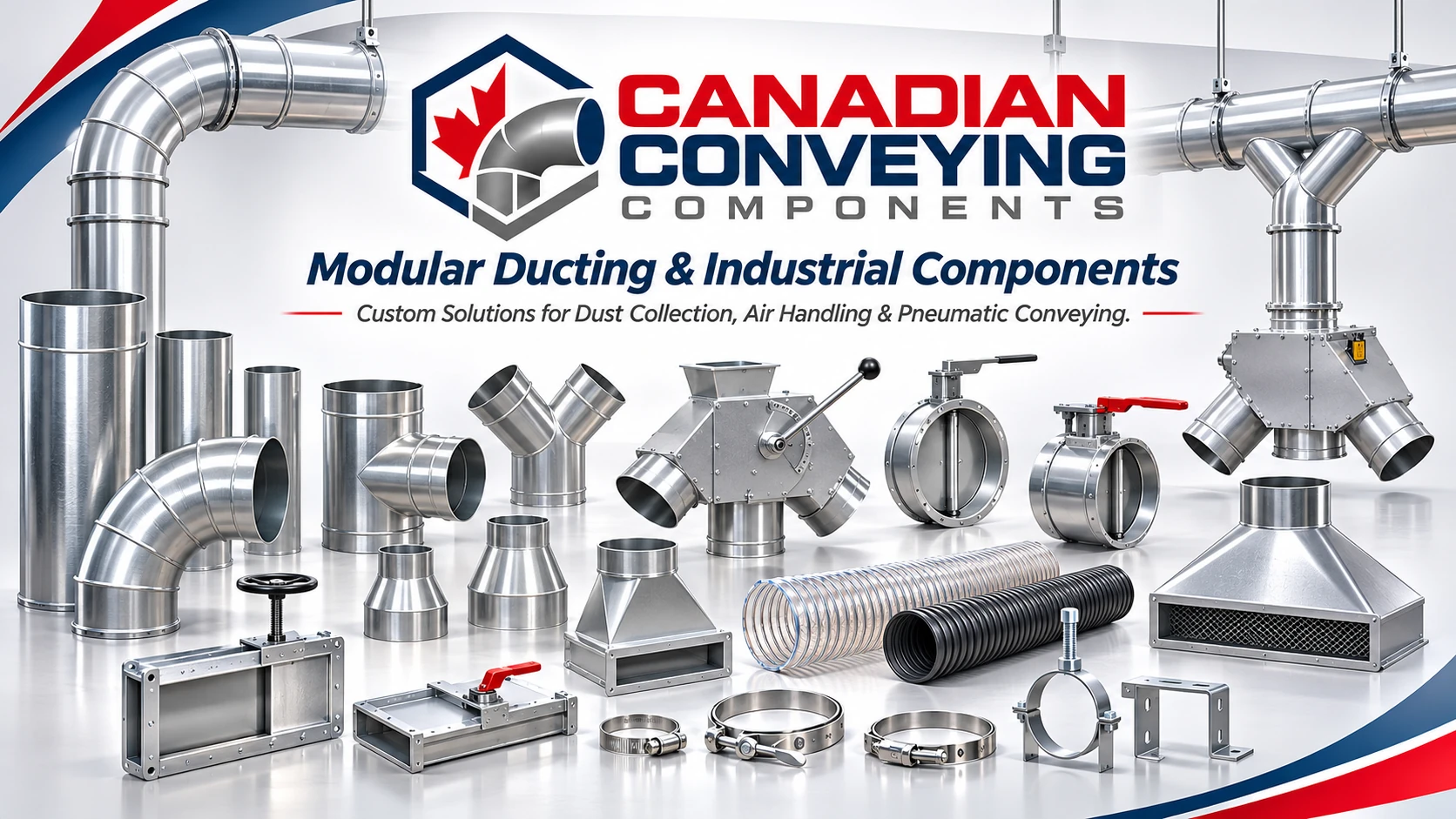
In addition to straight pipe and elbows, inquiries can include branches, reducers, adapters, end caps, slide gates, diverters, custom hoods, hose connections, hangers and other duct accessories. Exact sizes and configurations are confirmed with the supplier.
Is clamp-together ductwork suitable for positive-pressure conveying?
Not automatically. Many clamp-together duct systems are intended primarily for negative-pressure applications. Positive-pressure conveying requires supplier verification of the joint sealing, allowable pressure, material duty and the complete connection system.
What information do you need to prepare a quotation?
Send the component types, diameters, quantities and required materials, plus elbow angles, centreline radii or branch dimensions where relevant. Include photos or drawings of existing connections and the shipping destination if available.