Southwestern OntarioServing Canada & U.S.
HomeComponentsQuick-Release Pipe & Duct Clamps
Modular pipe connections • Replacement clamps • Sealing components

Quick-Release Pipe & Duct Clamps

Source quick-release clamp rings, pull-ring connectors, locking hardware and compatible seals for existing modular ductwork, dust collection and pneumatic conveying pipe systems. Connection profiles differ between piping systems, so replacement clamps are identified from your pipe dimensions, rolled-lip or bead profile, and existing hardware—not diameter alone.

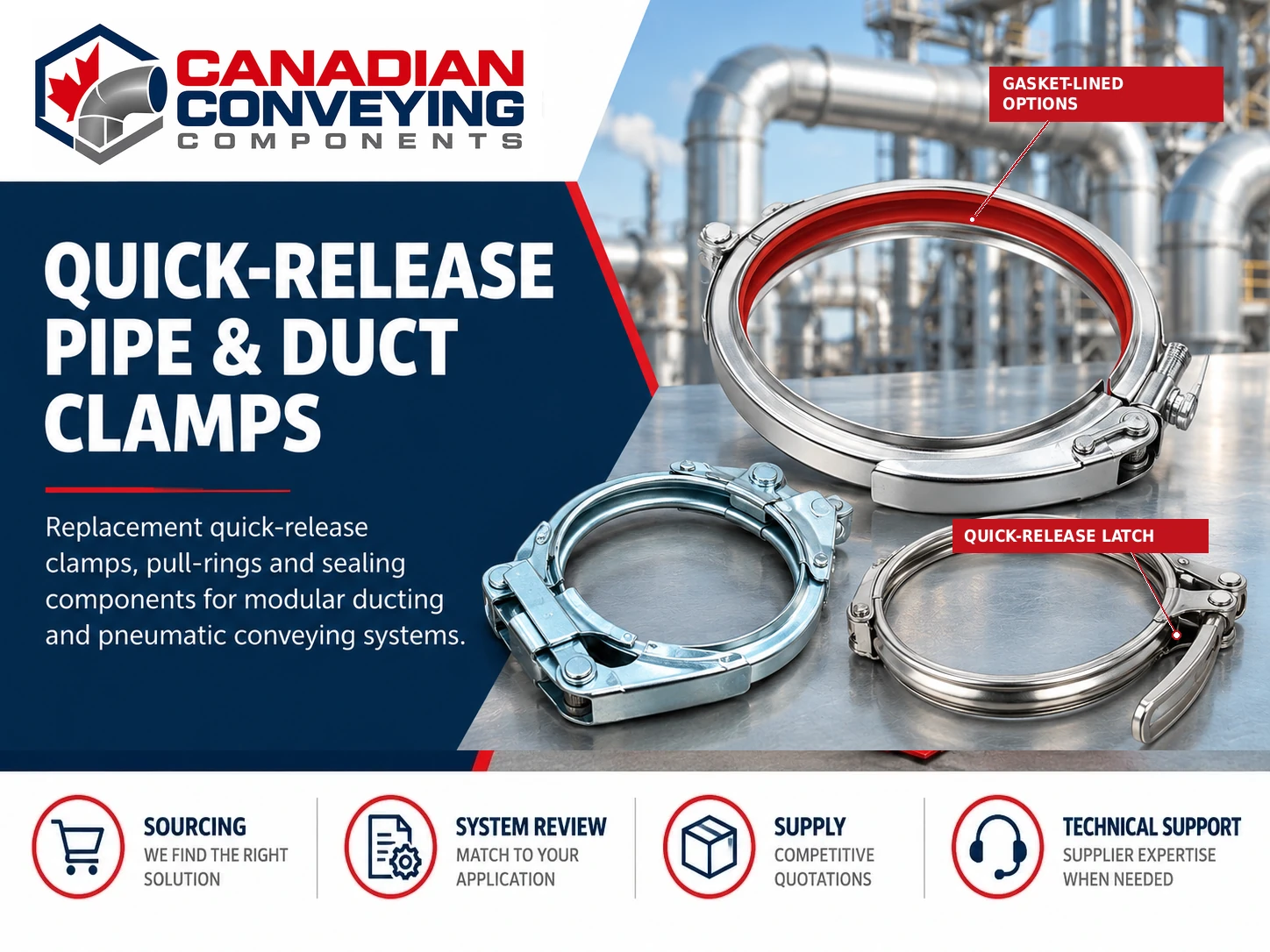
Supplier-neutral quick-release pipe and duct clamps showing hinged metal pull-ring designs and a representative red gasket liner

Representative quick-release and pull-ring clamp styles. Actual clamp geometry, size, latch hardware and sealing system depend on the existing pipe connection and supplier specifications.

Replacement clamp sourcing

For a reliable replacement, the clamp must match the pipe ends and the intended sealing method. We help gather the information needed for a supplier-supported quotation.

Equipment options

Depending on the pipe system, inquiries may include:

  • Hinged quick-release clamps and over-centre latch rings
  • Two-piece pull-rings and associated connection hardware
  • Gasket-lined clamps, U-profile seals, O-rings and compatible replacement seals
  • Galvanized, stainless and other supplier-supported configurations

Typical applications

Common replacement and maintenance needs include:

  • Modular clamp-together dust collection ductwork
  • Pneumatic conveying and material transfer pipe sections
  • Frequent-access connections for cleaning or maintenance
  • Repairs, plant modifications and spare-parts inventories

Information for a quotation

Send what you have, especially:

  • Installed pipe-system manufacturer, model or an existing clamp photo
  • Nominal size, measured outside diameter and connection lip or bead details
  • Gasket profile/material, metal finish, quantity and delivery location
  • Service conditions, including vacuum/pressure, material and temperature

One category, several connection families

Quick-release clamps look similar at a glance, but many are designed around particular pipe-end shapes and sealing arrangements.

Rolled-lip duct clamps

Clamps for modular, rolled-lip ducting typically capture the mating pipe lips and use a system-specific seal or gasket-lined clamp. Verify the pipe-end form, outside diameter and latch configuration before substituting components.

Pull-ring connections

Some thin-wall tubing systems use a lipped pipe end, separate U-shaped seal and a two-piece or quick-connect pull-ring. The sealing profile, lip dimensions and wall thickness must correspond to the actual system.

Alternative quick-release styles

Other equipment uses split rings, different latch mechanisms, special connection profiles or seal materials. A photographed existing clamp and pipe end are often more useful than the nominal pipe diameter alone.

Compatibility and service considerations

The replacement should be qualified as a connection assembly, not simply as a metal ring that closes around the pipe.

Pipe and seal geometry

Check the actual outside diameter, lip height and thickness, rolled-edge profile, available clearance and gasket placement. Seemingly similar clamps from different systems are not automatically interchangeable.

Duty and materials

Specify duct or pipe service, conveyed material, operating temperature, chemical or abrasion exposure, and any sanitation requirements. Seal and clamp materials should be selected using supplier data.

Pressure, grounding and safety

Pressure/vacuum limits, bonding or static-control needs, and any combustible-dust or explosion-pressure requirements apply to the full approved connection assembly. Never assume certification or pressure capacity transfers to a substituted clamp.

Request a replacement clamp quotation.

Start with a clear photo of the existing clamp, its open latch and the two pipe ends. Include the pipe-system identification and a few measurements if available. We can help clarify what a supplier needs to confirm compatibility.

Existing clamp photo, brand or reference number
Nominal pipe size and measured outside diameter
Rolled lip or bead profile; gasket style and material
Service conditions, quantity and delivery location

Related piping & connection products

Browse adjacent component categories for conveying line modifications and repair parts.

Frequently asked questions

Practical questions about replacement quick-release clamps, pull-rings and seals.

Are quick-release clamps interchangeable between different duct or pipe systems?

Not necessarily. Manufacturers use different pipe-end geometry, lip profiles, gasket dimensions and latch configurations. Even when nominal diameters match, compatibility must be checked with the selected supplier before ordering or installation.

What is the difference between a quick-release clamp and a 3 or 4 bolt coupling?

A quick-release clamp or pull-ring commonly captures lipped pipe ends using a latch, ring and appropriate seal. A 3 or 4 bolt coupling typically uses a different bolted connection construction. They are separate product families and should be selected for the intended pipe system.

Can you source only the clamp, without replacing the pipe?

That is the intended use of this category. Send the existing clamp photo or part number and details of the pipe end. Availability of an exact or compatible replacement is confirmed through a supplier quotation.

Can you supply matching seals or gaskets?

We can coordinate inquiries for gaskets, O-rings and U-shaped seals where supported by a suitable supplier. Seal compatibility depends on the pipe connection profile, material, temperature and operating conditions.

Can a clamp be used for vacuum, pressure or combustible-dust service?

Only where the complete connection assembly is suitable and appropriately documented for the applicable duty. Component appearance or nominal size does not establish pressure, static-grounding or explosion-protection suitability. Consult the original system documentation and qualified personnel where required.

What should I measure if there is no part number?

Photograph the installed clamp and pipe ends, then record the nominal pipe size, actual outside diameter, lip or bead profile and gasket type if possible. Include the service and a photo of the open latch; we can help identify any remaining information a supplier requests.