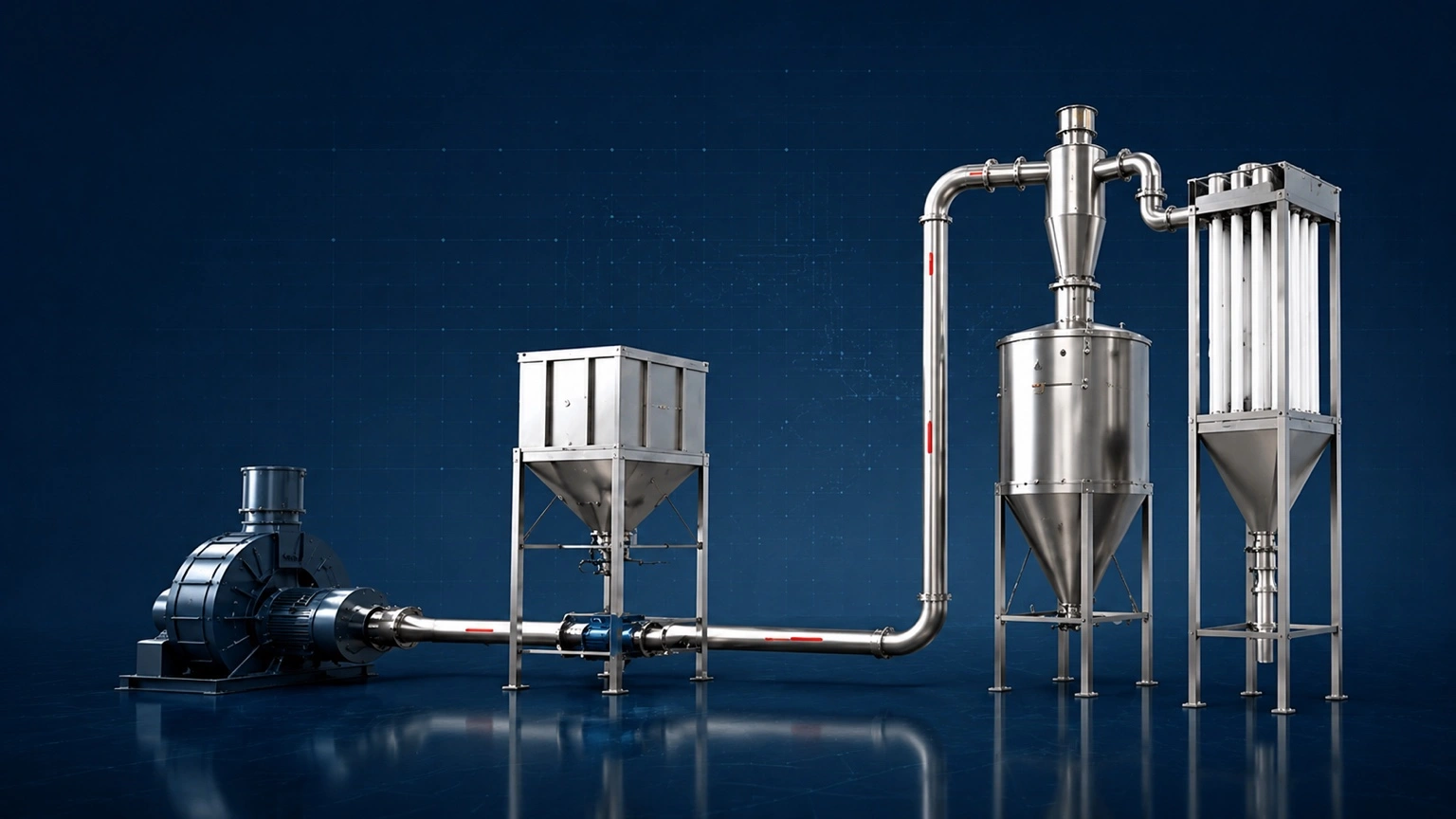
Metering & feeding
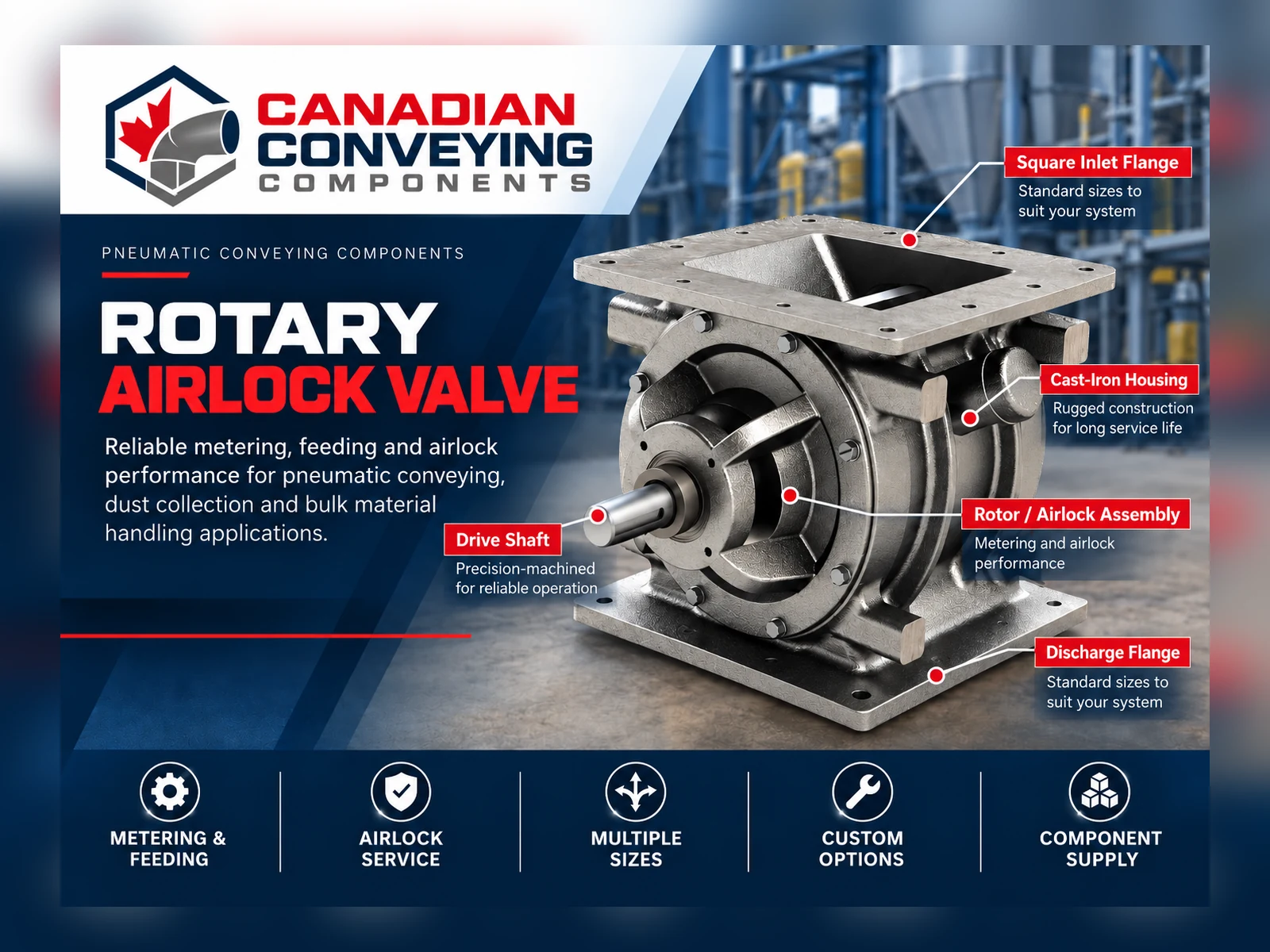
Rotary Airlock Valves
Cast-iron airlocks for bulk material feeding, discharge and airlock duty.
Explore product
Drawing on years of hands-on industrial experience, we help identify and source conveying components, replacement parts and equipment suited to your application. We explore practical options beyond a single manufacturer’s catalogue. Send a part number, photo or drawing to get started.
Email photos, drawings or nameplates. Add quantity and delivery location if known.
Browse representative parts and equipment. Swipe or use the arrows to explore, then open a product for specifications and quotations.
Cast-iron airlocks for bulk material feeding, discharge and airlock duty.
Explore product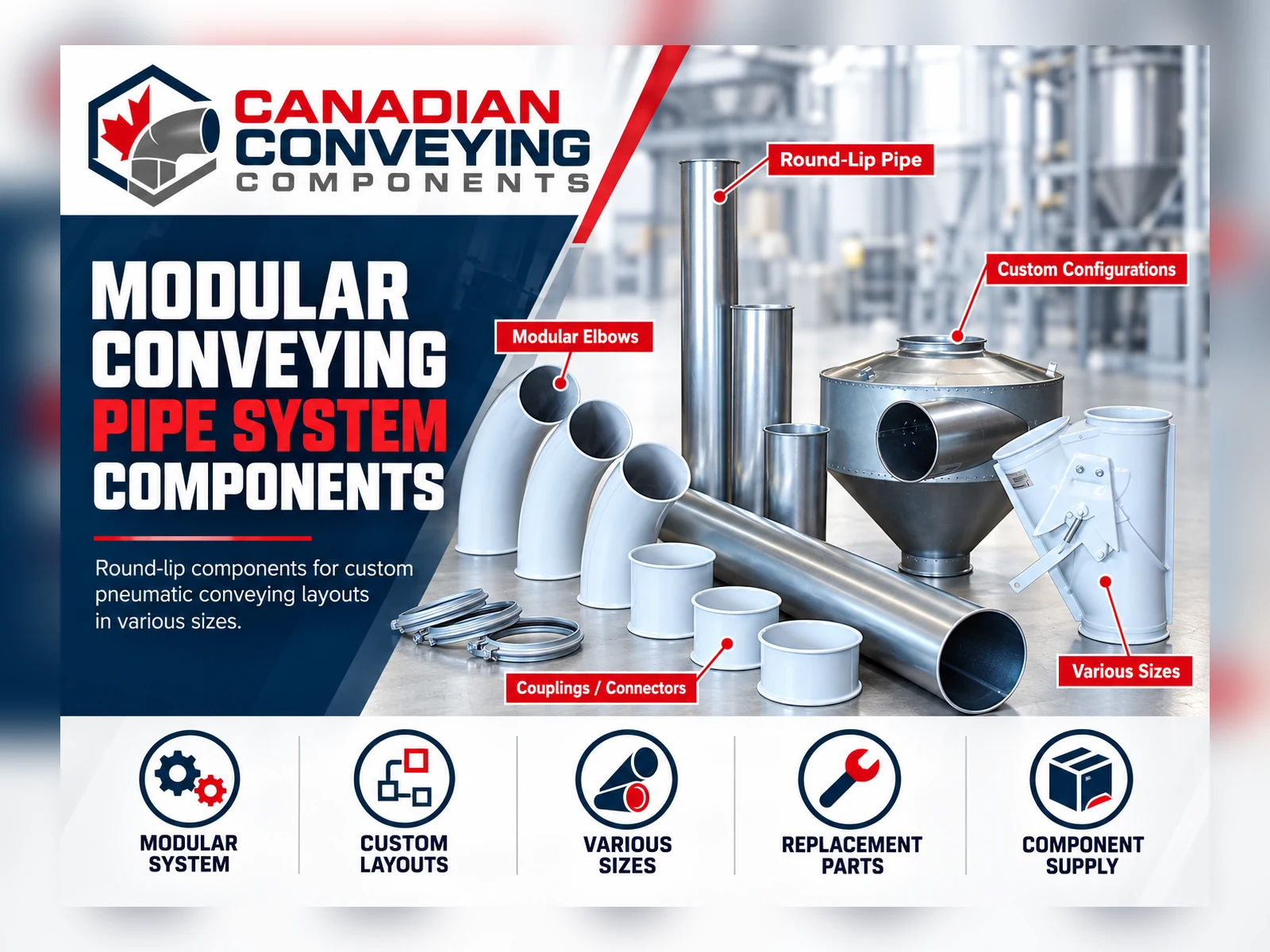
Clamp-together conveying pipe, elbows, fittings and modular line sections.
Explore product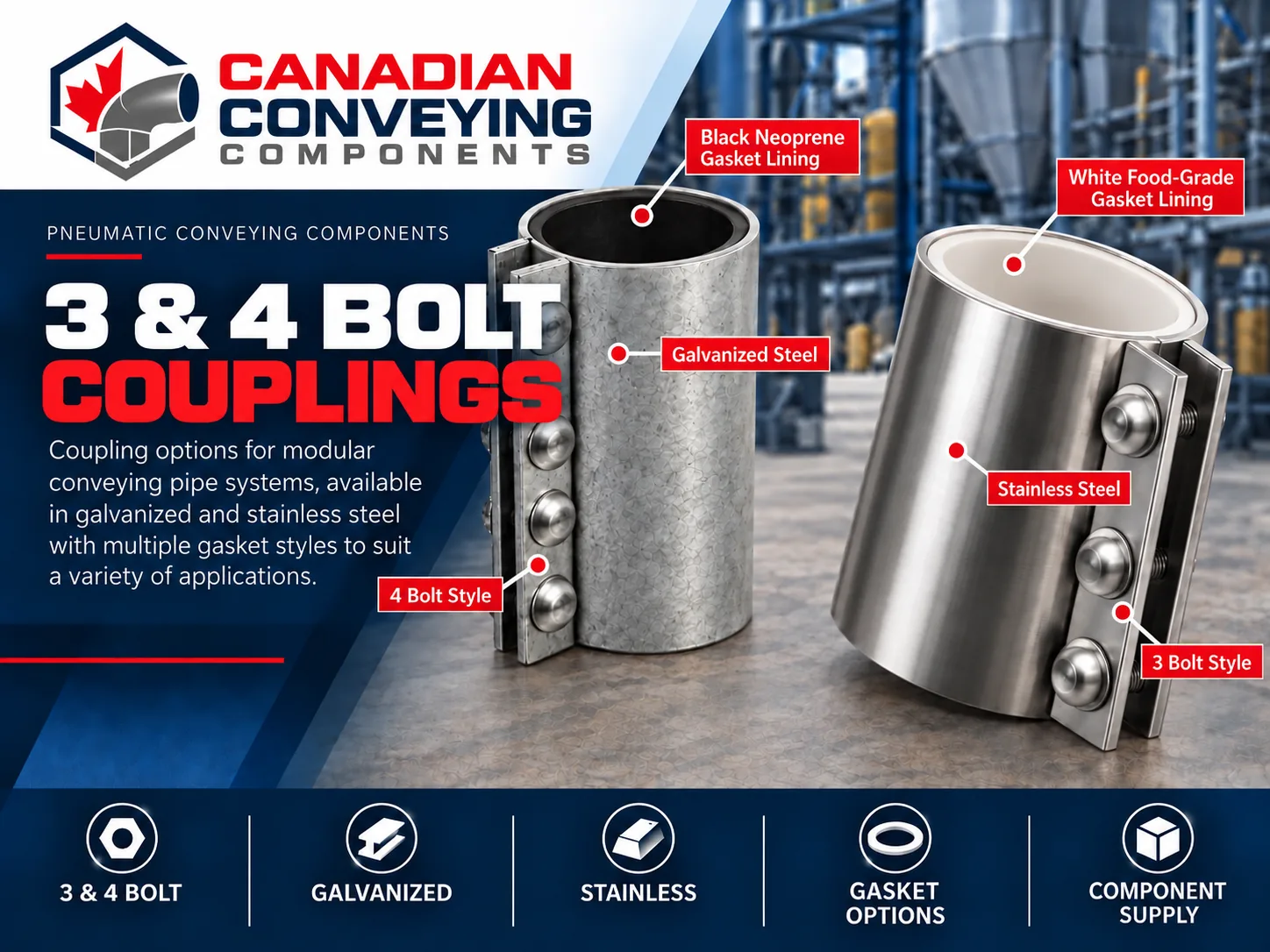
Galvanized or stainless couplings with neoprene or white gasket lining options.
Explore product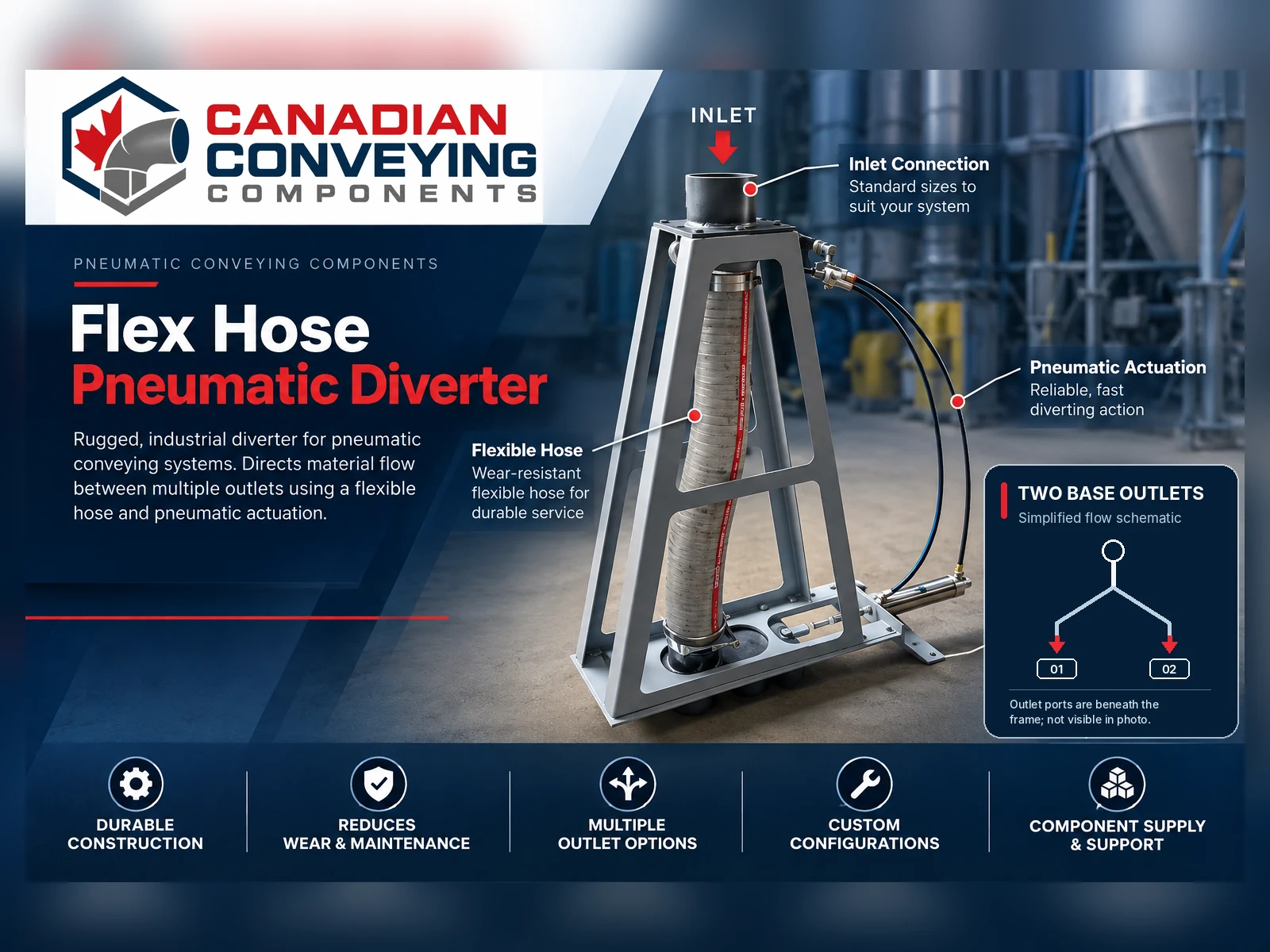
Pneumatically operated diverters for selecting between two outlet paths.
Explore product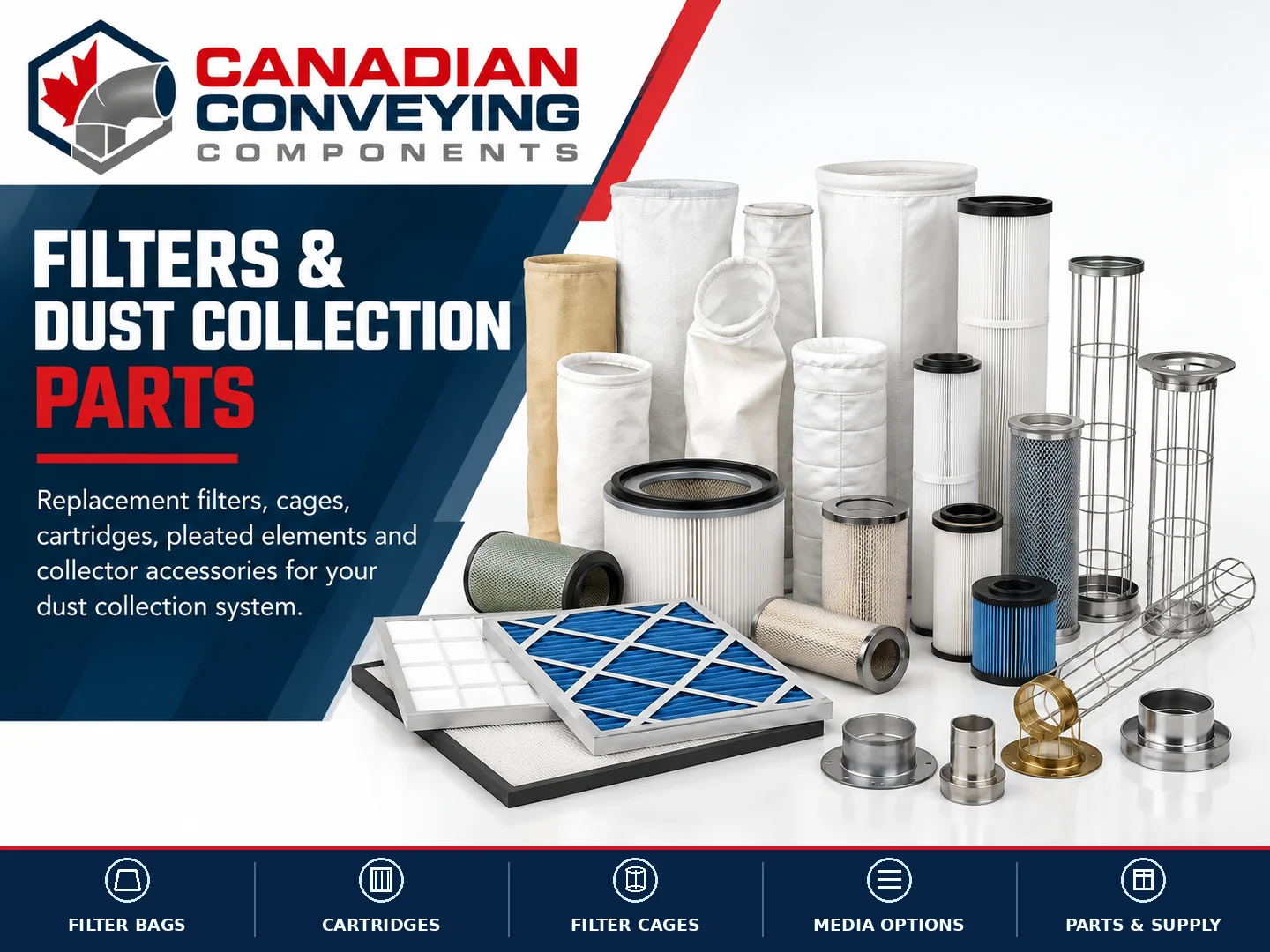
Replacement bags, cartridges, cages and dust-collector accessories.
Explore product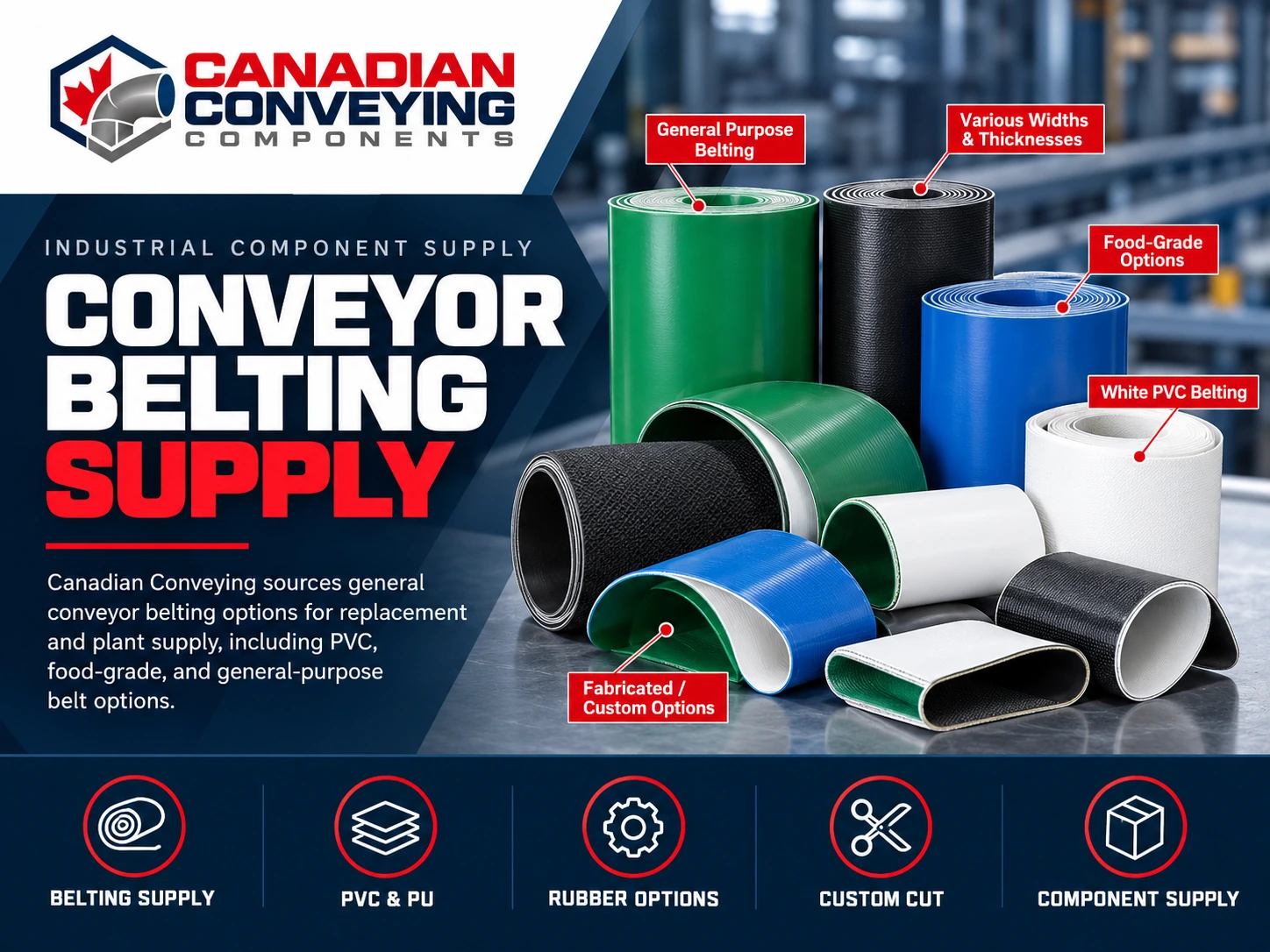
PVC, PU and rubber belting, including white PVC and fabricated belt options.
Explore product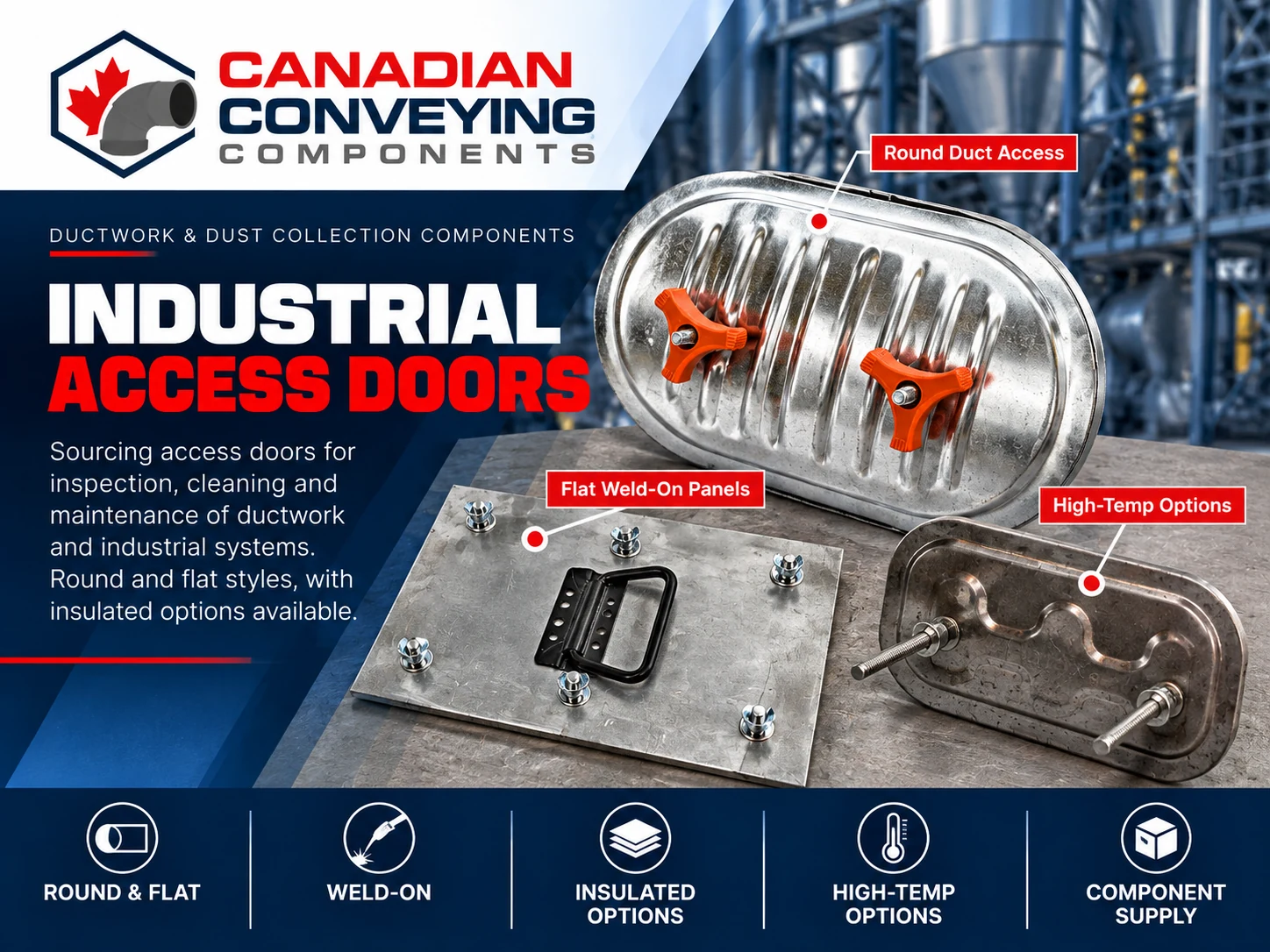
Round, flat weld-on and insulated access panels for ductwork and equipment.
Explore product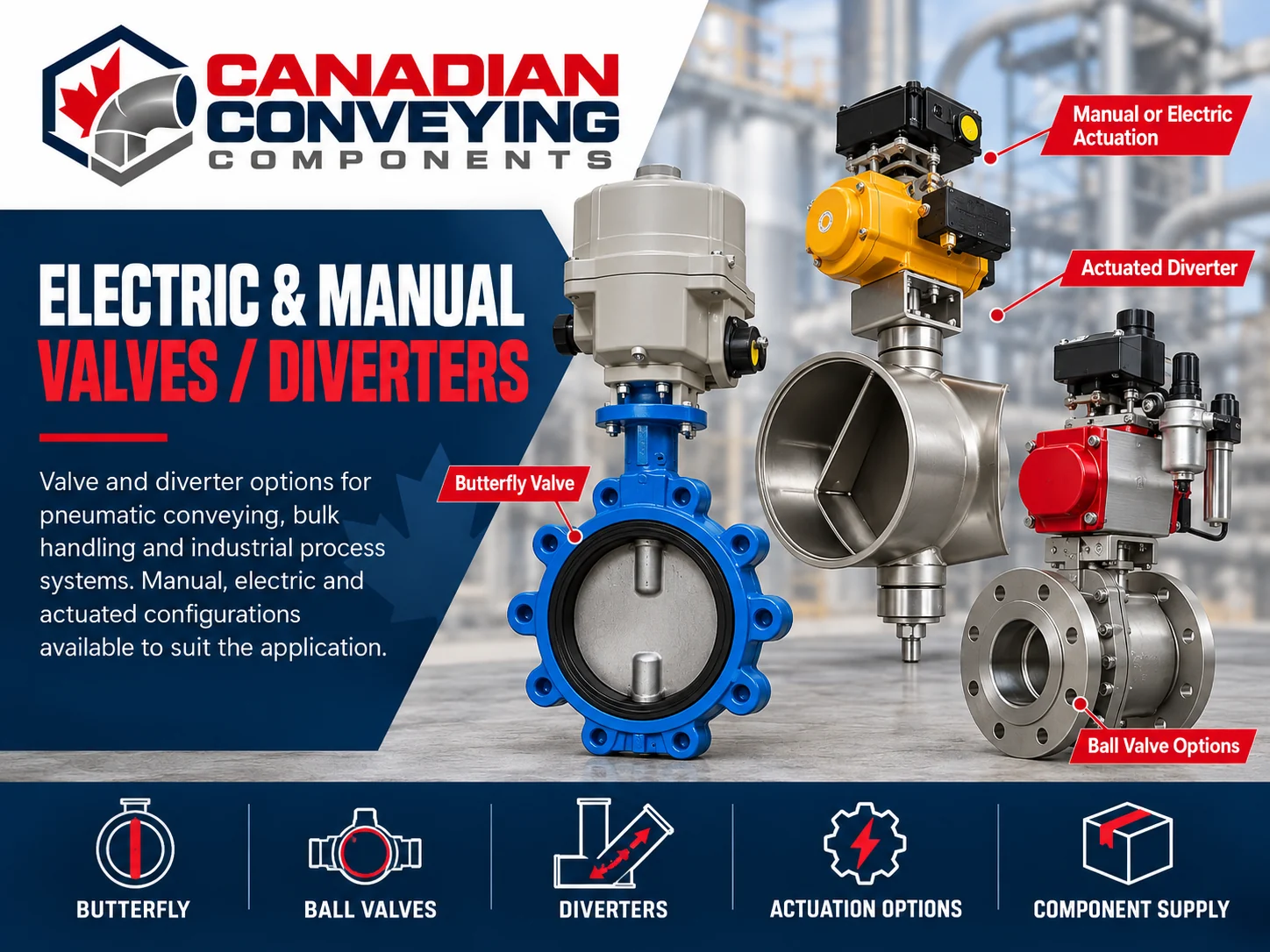
Butterfly valves, ball valves and diverters with manual or powered actuation options.
Explore product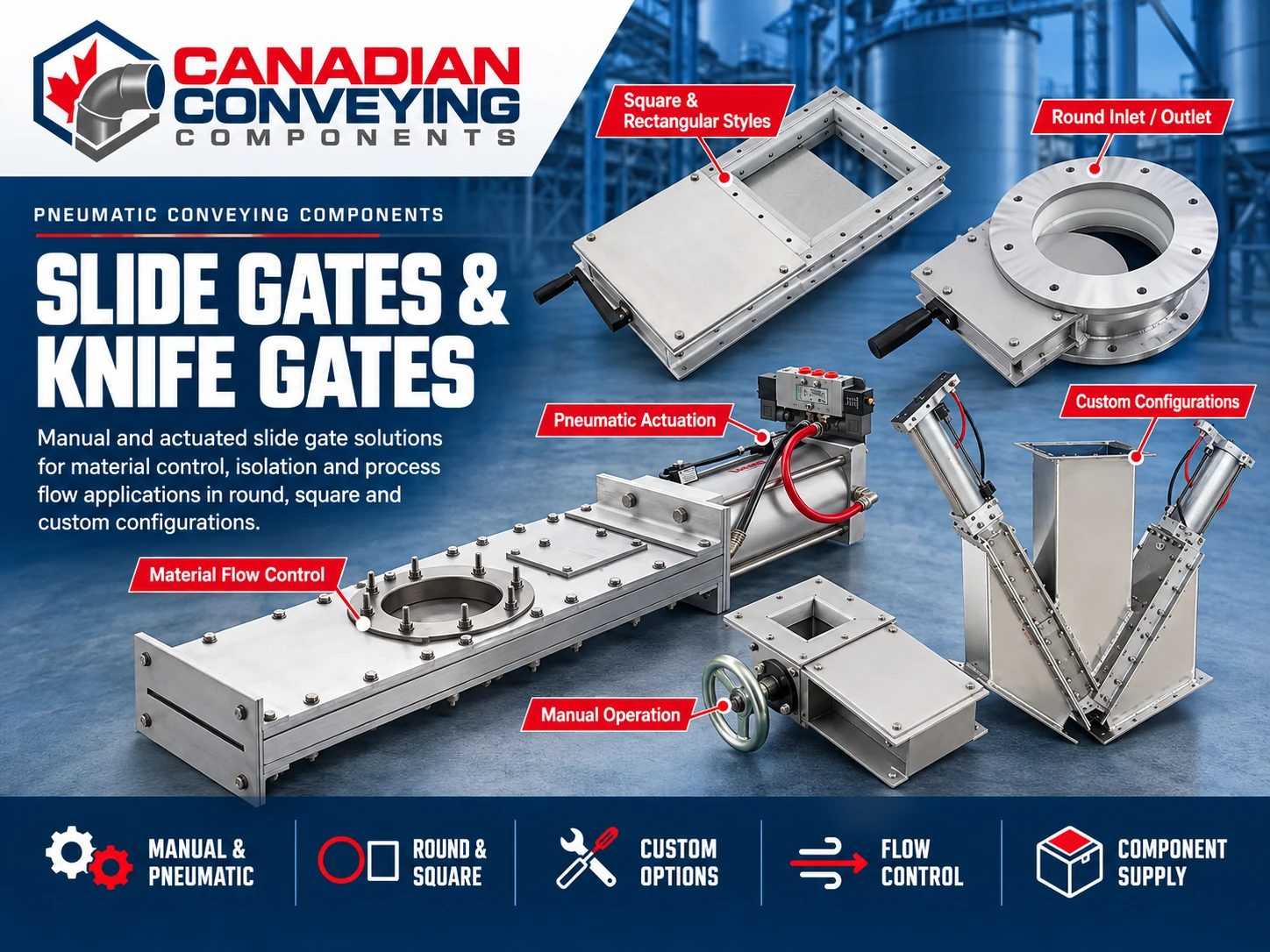
Round and rectangular slide gates; manual, handwheel and pneumatic operating options.
Explore product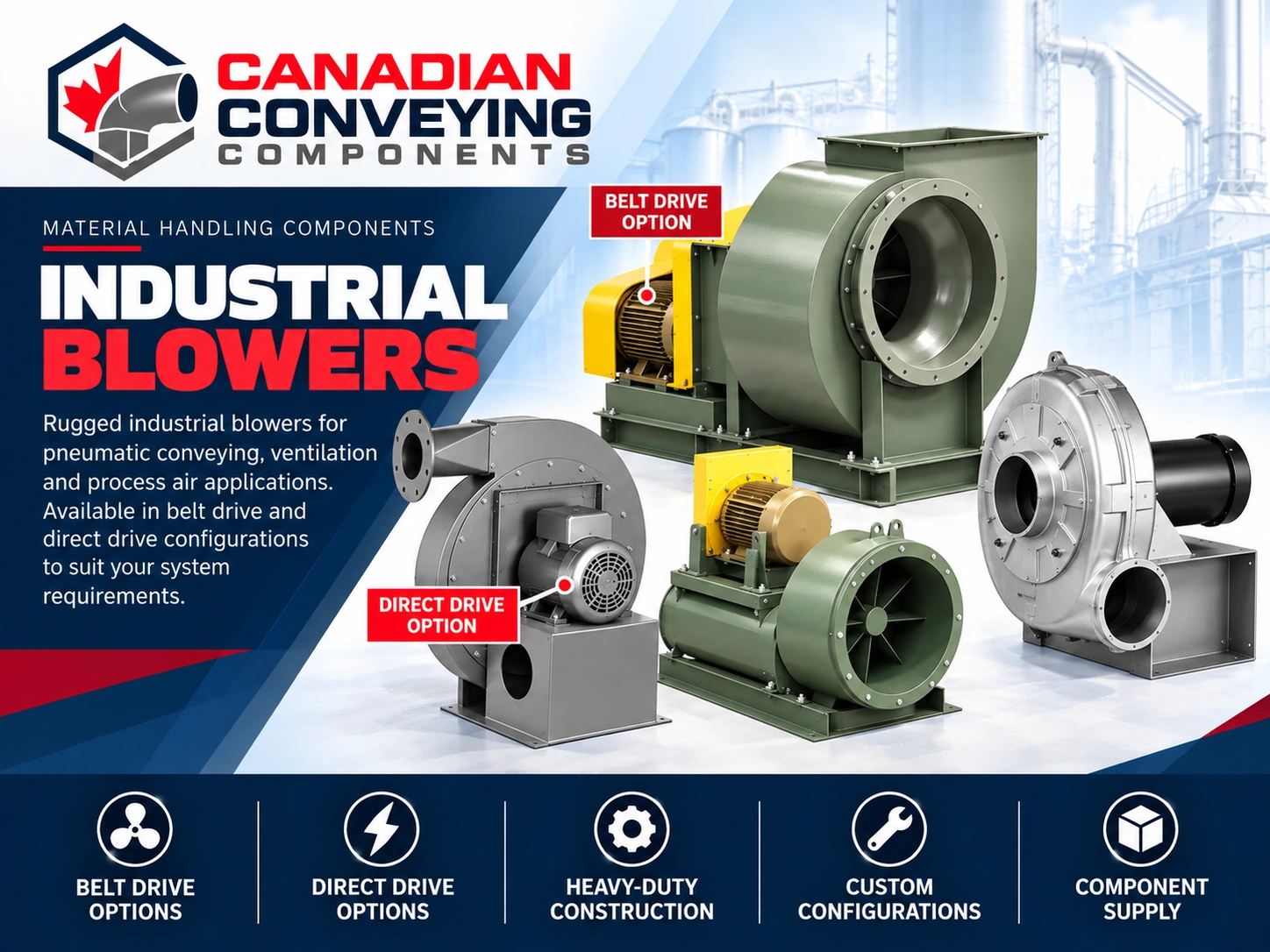
Centrifugal blowers and process fans with belt-drive or direct-drive options.
Explore product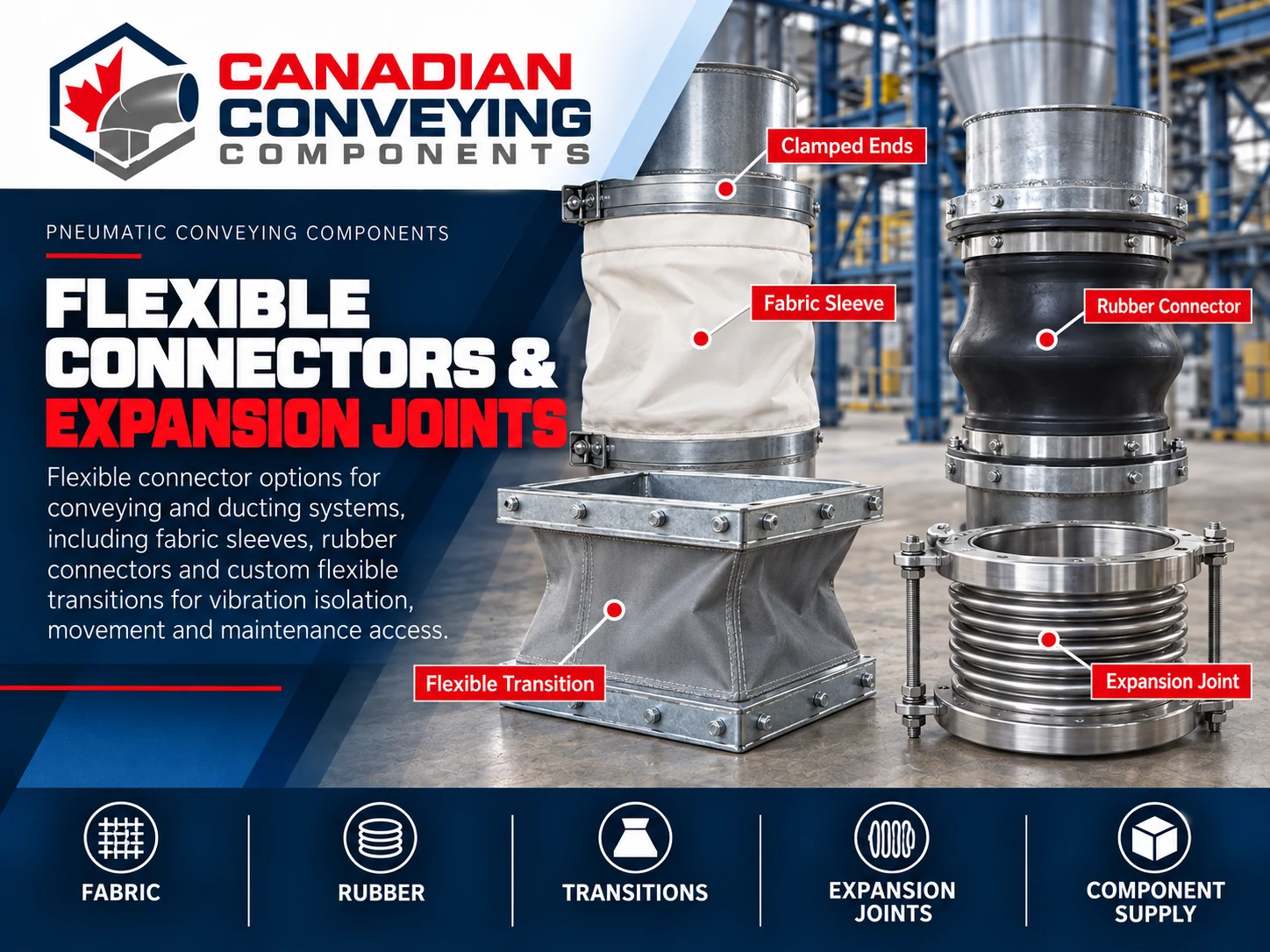
Fabric sleeves, rubber connectors and flexible transitions for conveying, dust collection and process equipment.
Explore product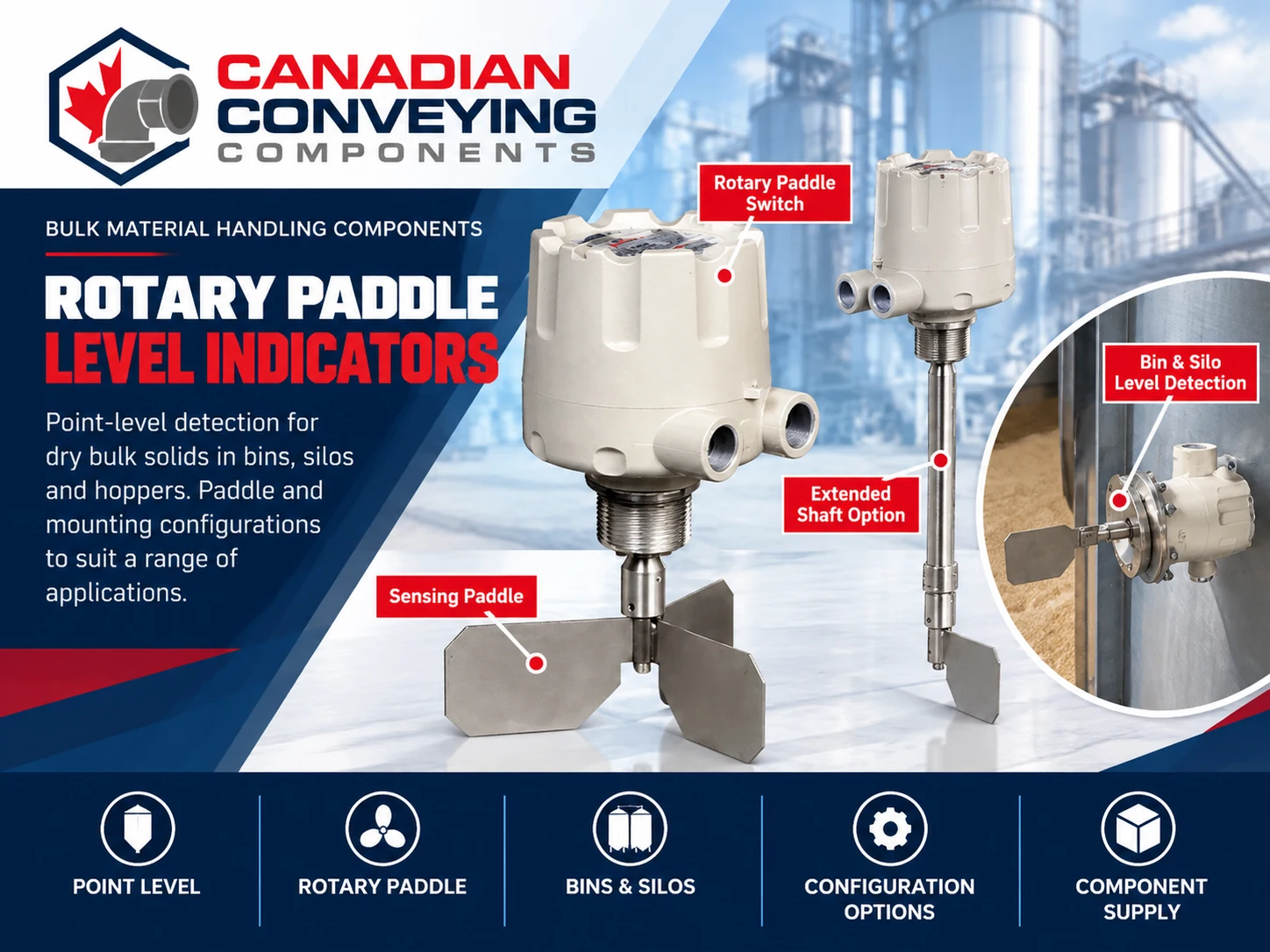
Rotary paddle point-level switches for dry bulk solids, with shaft, paddle and mounting options.
Explore product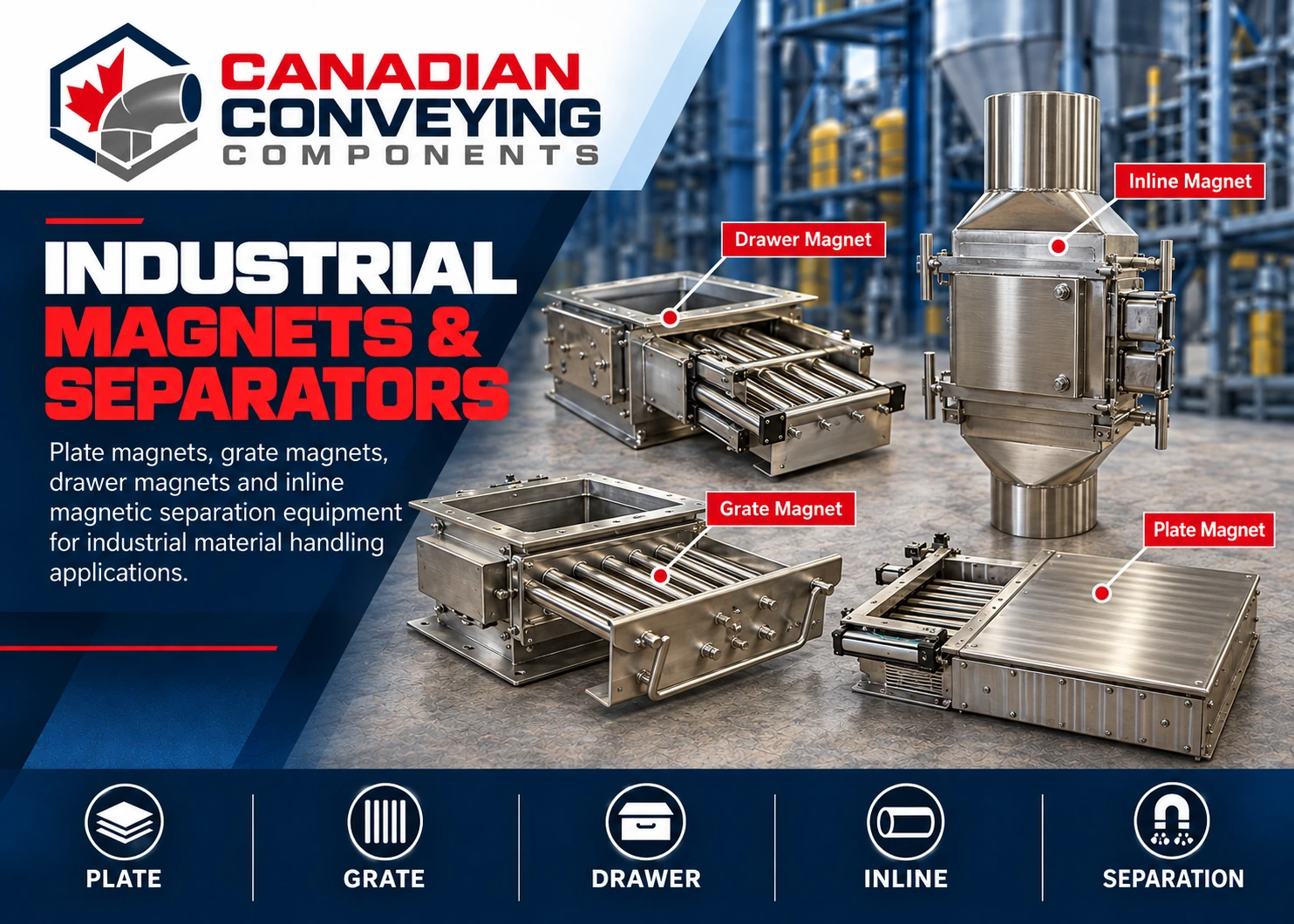
Plate, grate, drawer and inline magnetic separation equipment for dry bulk material handling.
Explore productStart with a part number, a photo or a drawing. Where the application matters, these details help suppliers confirm suitable options.




Practical sourcing. Reliable supply. Technical understanding. A straightforward process for individual replacement parts and coordinated equipment packages.
Send the part description, manufacturer or part number, quantity, dimensions and delivery location. Photos, nameplates, sketches and drawings help us identify replacements and clarify connection requirements.
We review the application requirements, approach suitable manufacturers, distributors or fabricators and clarify specifications before obtaining quotations. Your quote sets out the proposed product, quantity, price, available lead time and freight details, with any alternatives identified for your approval.
Once you approve the quotation and specifications, we coordinate the order and delivery arrangements. Supply may ship directly from the manufacturer or fabricator, with a clear point of contact for order questions and repeat purchases.
From a single clamp or filter to a package of valves, fittings and fabricated adapters, we coordinate product identification, supplier input and supply. Application-sensitive equipment is quoted using your specifications and supplier guidance; system design, installation and formal engineering work require a separately agreed scope.
From the first replacement part to your next planned shutdown, we help make sourcing straightforward.
Replacement parts, specialty equipment and custom-fabricated components.
Dimensions, connections and supplier specifications clarified before ordering.
Sourcing assistance for maintenance teams, plant engineers, contractors and OEMs.
Filters, wear parts and maintenance items for your next service or shutdown.
Helpful answers about finding parts, requesting quotes and arranging supply.
Yes. Photos, equipment nameplates, drawings, dimensions and details of the existing installation can help identify a filter, coupling, elbow, valve, gate, sensor or fabricated fitting.
We clarify the information needed for supplier identification and quotation. Any proposed substitute and its specifications are presented for your approval before ordering.
We can seek quotations using the existing manufacturer, model, ratings, dimensions and connection details. If a direct replacement is unavailable, we can coordinate supplier input on alternatives using the operating information you provide.
Changes to capacity, pipe sizing or system operation may require supplier testing or a separate engineering review before a replacement is approved.
Yes. We coordinate quotations for replacement units and application-sensitive equipment. Relevant details include material, capacity, pressure or vacuum, inlet and outlet sizes, duty cycle, wear, sanitation and clean-out requirements. Supplier specifications and suitability requirements are clarified as part of the quote.
Both. We welcome requests for a single filter, coupling, clamp, elbow or fabricated adapter, as well as coordinated packages of valves, pipe, fittings, filters and specialty equipment. Availability and lead times are confirmed through the quotation process.
We can seek quotations for transitions, spool pieces, flanges, replacement hoppers, discharge gates and related components using your drawings or agreed dimensions. Bin or silo equipment inquiries can also be discussed with suitable suppliers. Structural design, foundations and installation requirements are separately assessed by the appropriate qualified parties.
Yes. We can source supplier-supported level detection products such as rotary paddle indicators, tuning fork switches, capacitive sensors, ultrasonic sensors and radar sensors. Send the existing model or details of the material, mounting arrangement, required signal and operating conditions.
Supplier input helps clarify suitable options for the application. Electrical installation and controls integration are arranged separately with qualified trades or your plant team.
Our core offering is component and equipment supply. Installation is generally handled by your maintenance team or a qualified contractor. Where useful, we can discuss fabricator or contractor referrals and clarify the supply scope before an order is placed.
Browse industrial parts available for supplier inquiry, including dust collector filter bags and cartridges, rolled-lip conveying pipe and clamps, 3 and 4 bolt couplings, conveyor belting, industrial access doors, rotary airlocks, slide gates, knife gates, diverters, spiral ductwork, belt-drive and direct-drive industrial blowers and bulk-handling equipment.
Popular inquiries: Rolled-lip pipe & clampsRotary airlock valvesReplacement filter identificationBulk bag unloading & handlingSlide & knife gatesIndustrial blowers & fans
See additional parts, fittings, equipment and sourcing options beyond the featured examples.
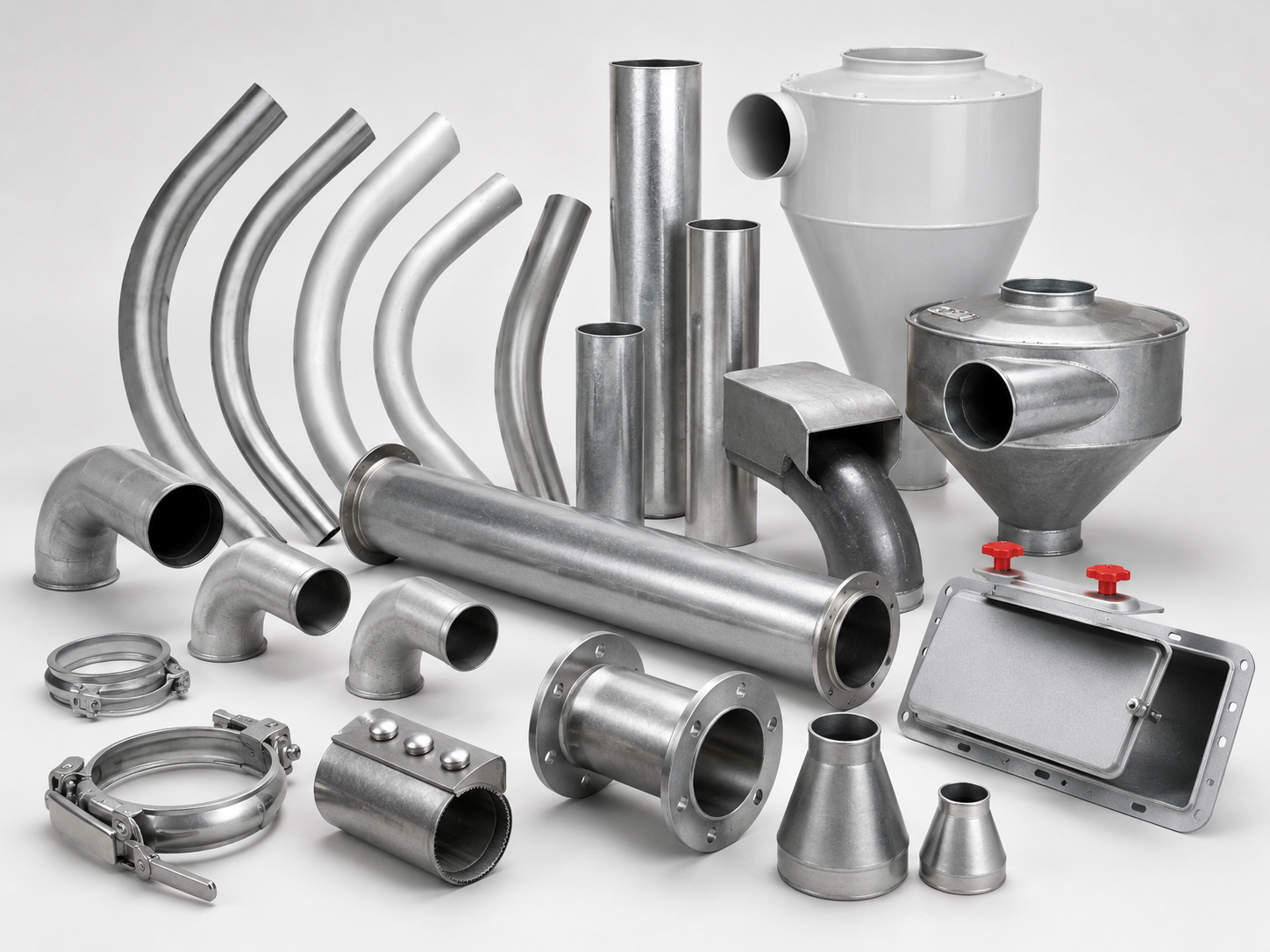
Pipe, elbows, bends, couplings, clamps, access doors and line components for replacement and project supply.
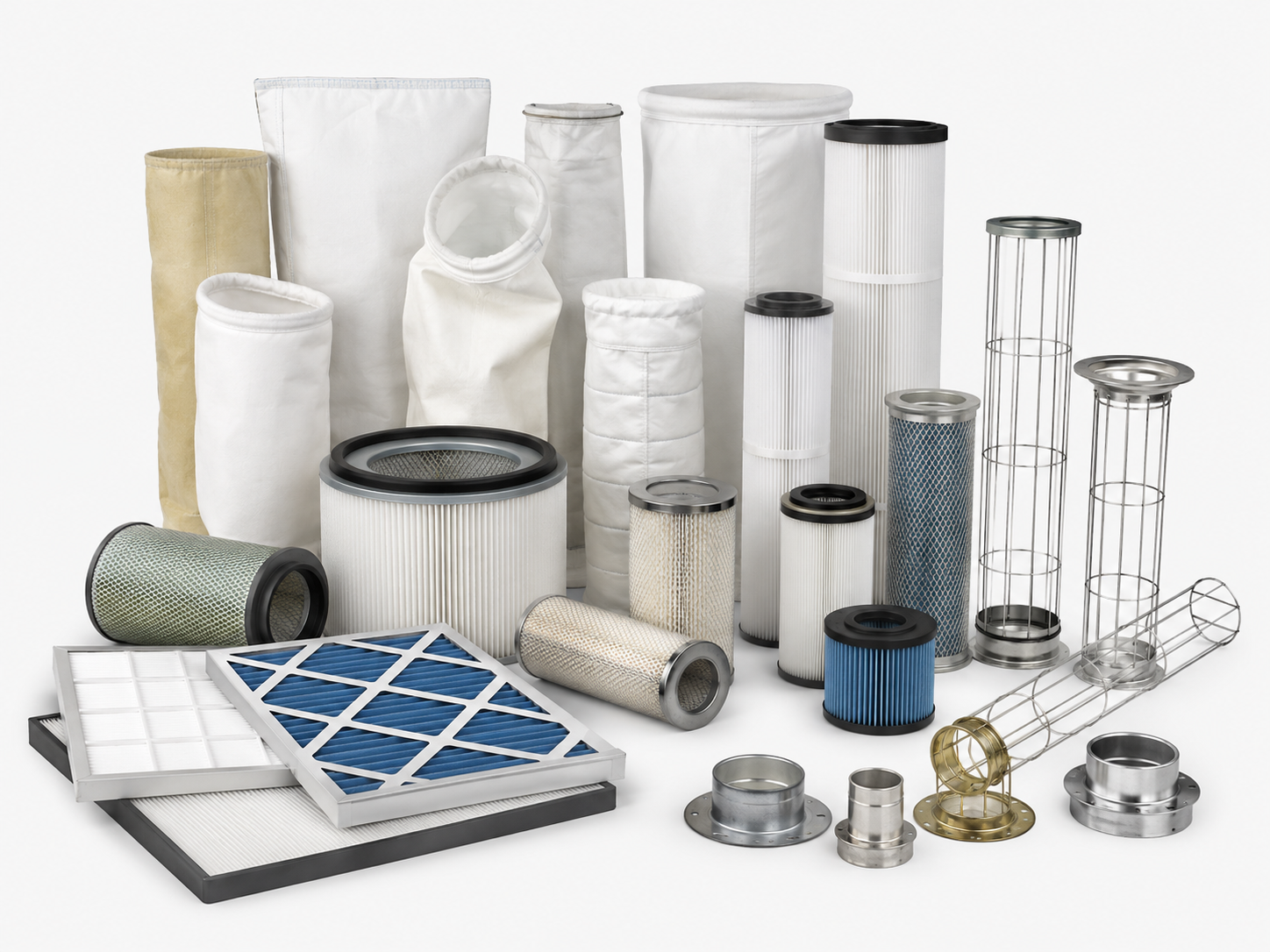
Replacement filters, cages, cartridges, pleated elements and collector accessories selected around the dust and equipment.
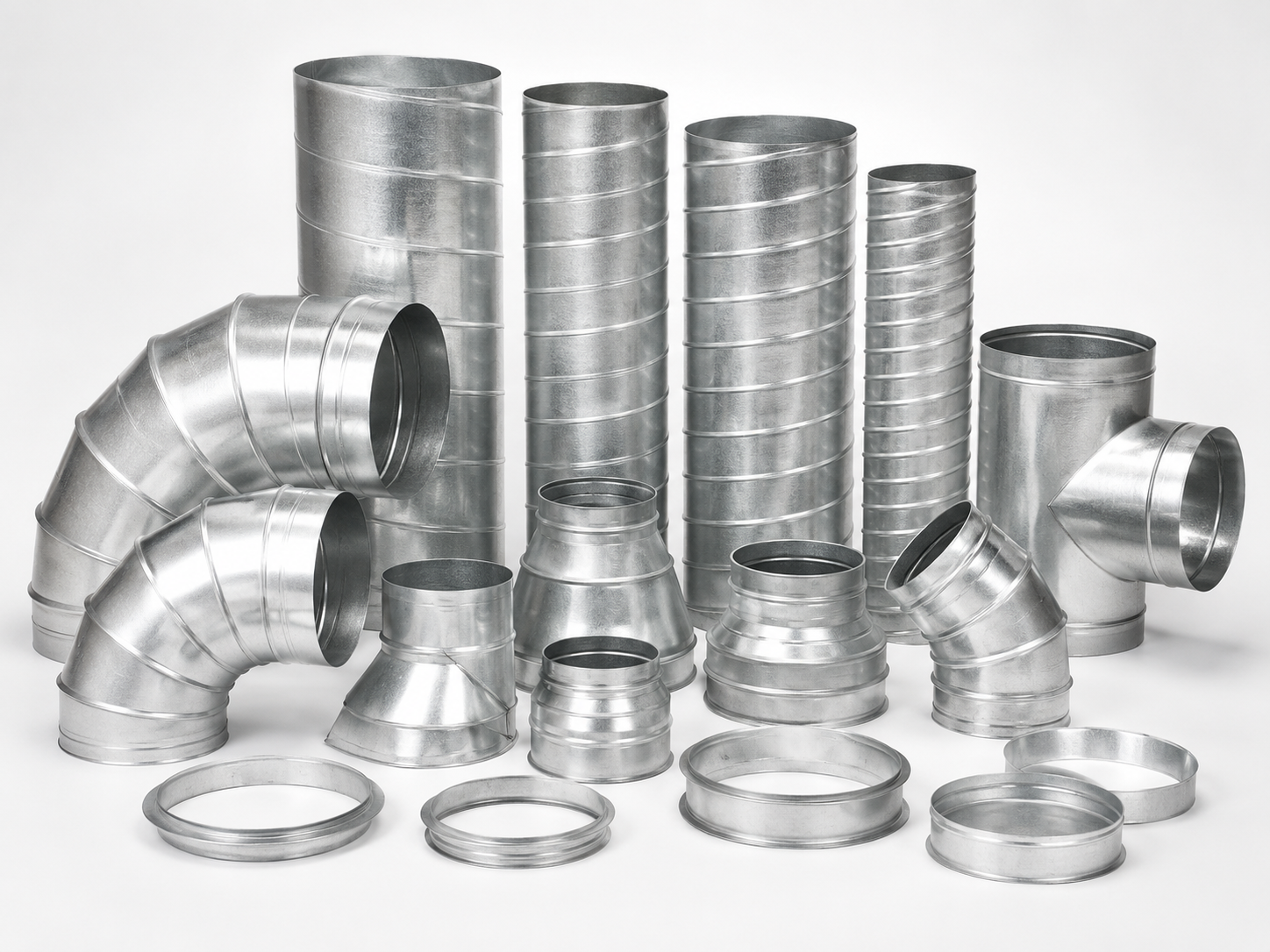
Spiral pipe, elbows, reducers, branches, dampers and accessories for dust collection, ventilation and process air.

Transitions, adapters, spool pieces and flanges sourced from fabricators to your drawings or agreed specifications.

Slide gates, diverters, dampers and flow-control components selected for the material and system condition.

Replacement units and specialty equipment sourced using manufacturer details, application requirements and supplier input.
Practical guidance for identifying parts, checking application details and preparing better supplier inquiries.
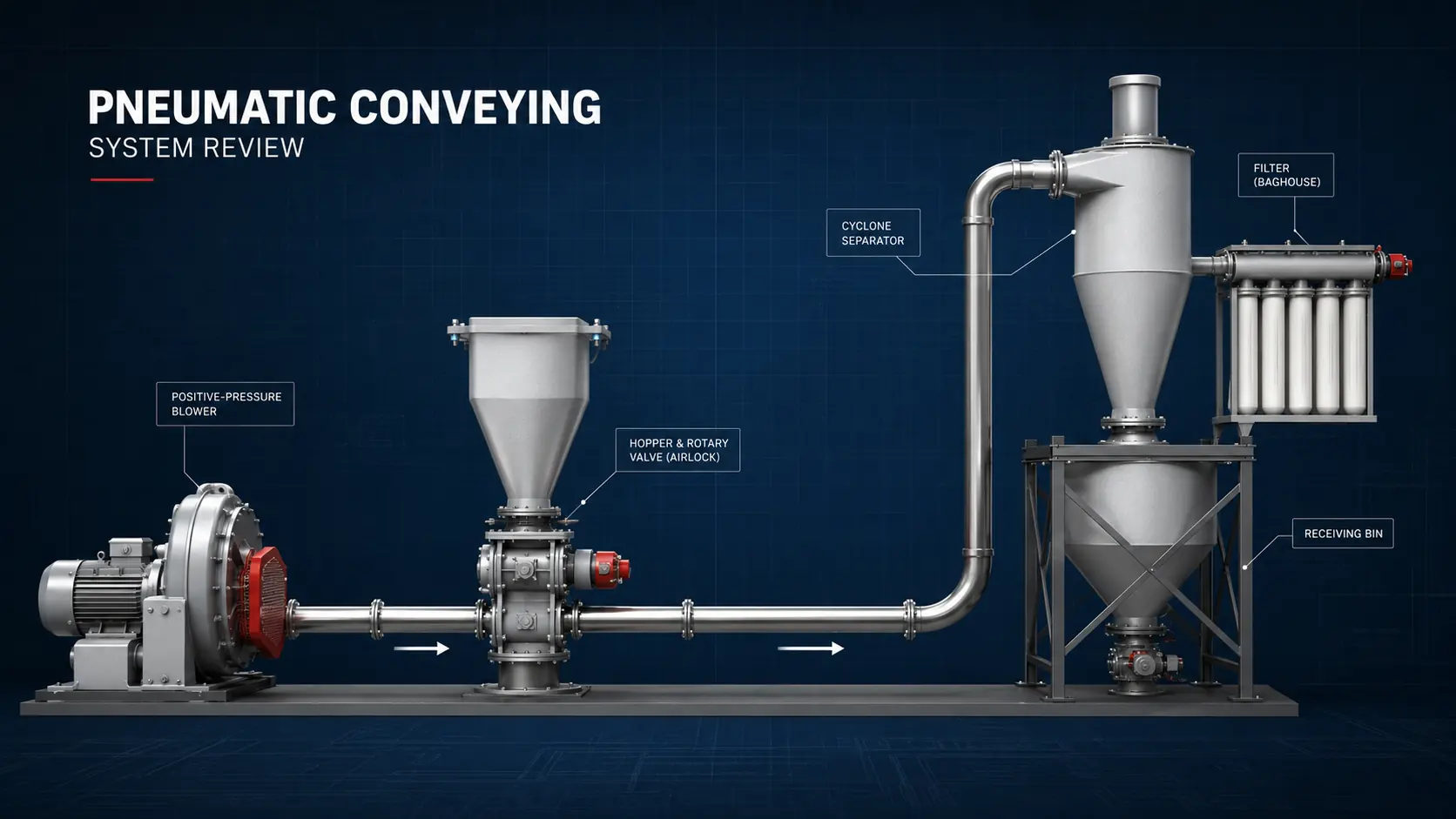
Background on conveying layouts and operating details useful when sourcing blowers, valves and line components.
Explore reference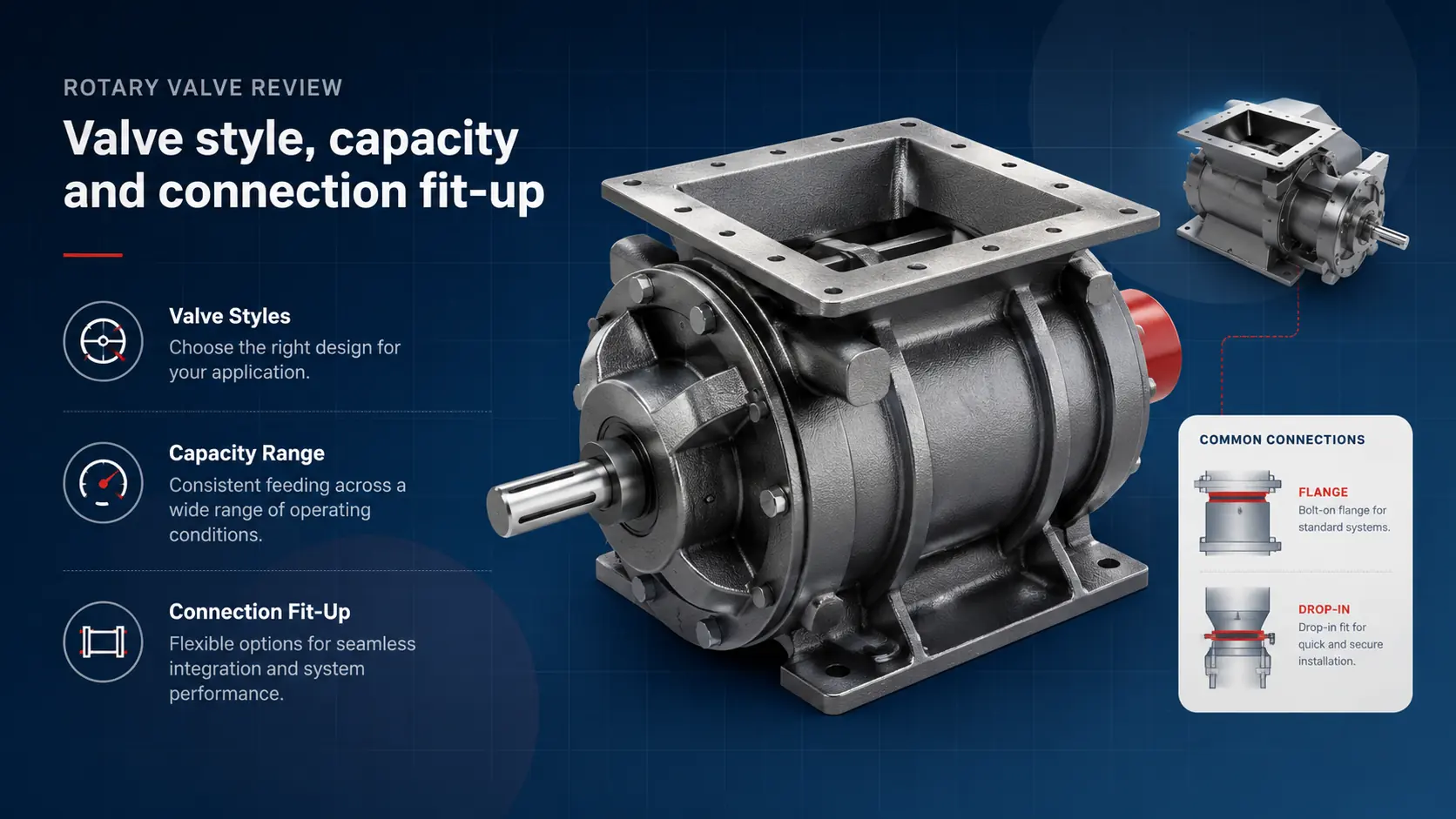
Feeding and airlock equipment, including metering applications, replacement valves and connection details.
Explore equipment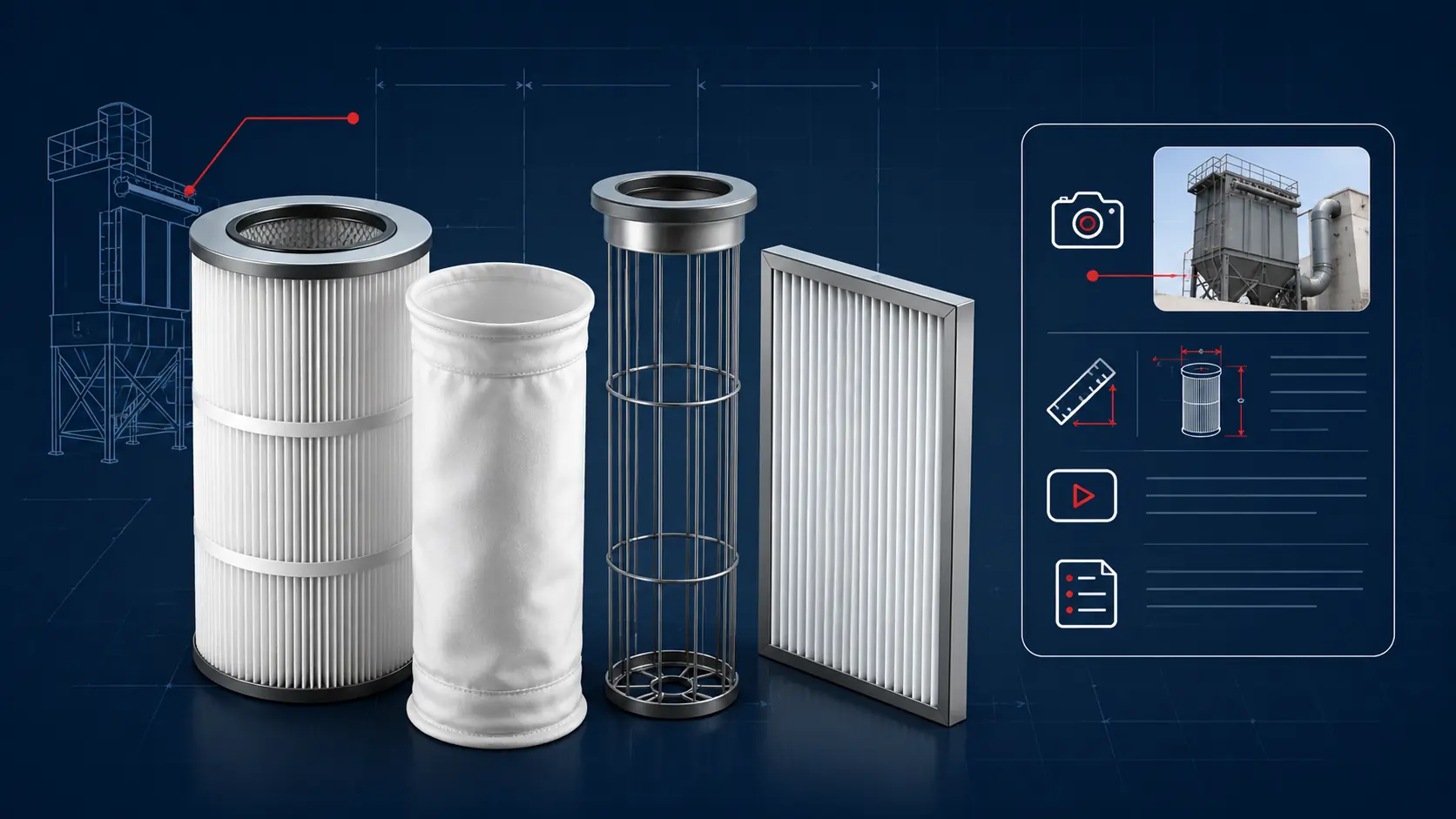
Identification guidance for replacement bags, cartridges, support cages, filter media and collector parts.
Explore filtersComponent sourcing and equipment supply for plants, contractors, OEMs, maintenance teams and facility managers.
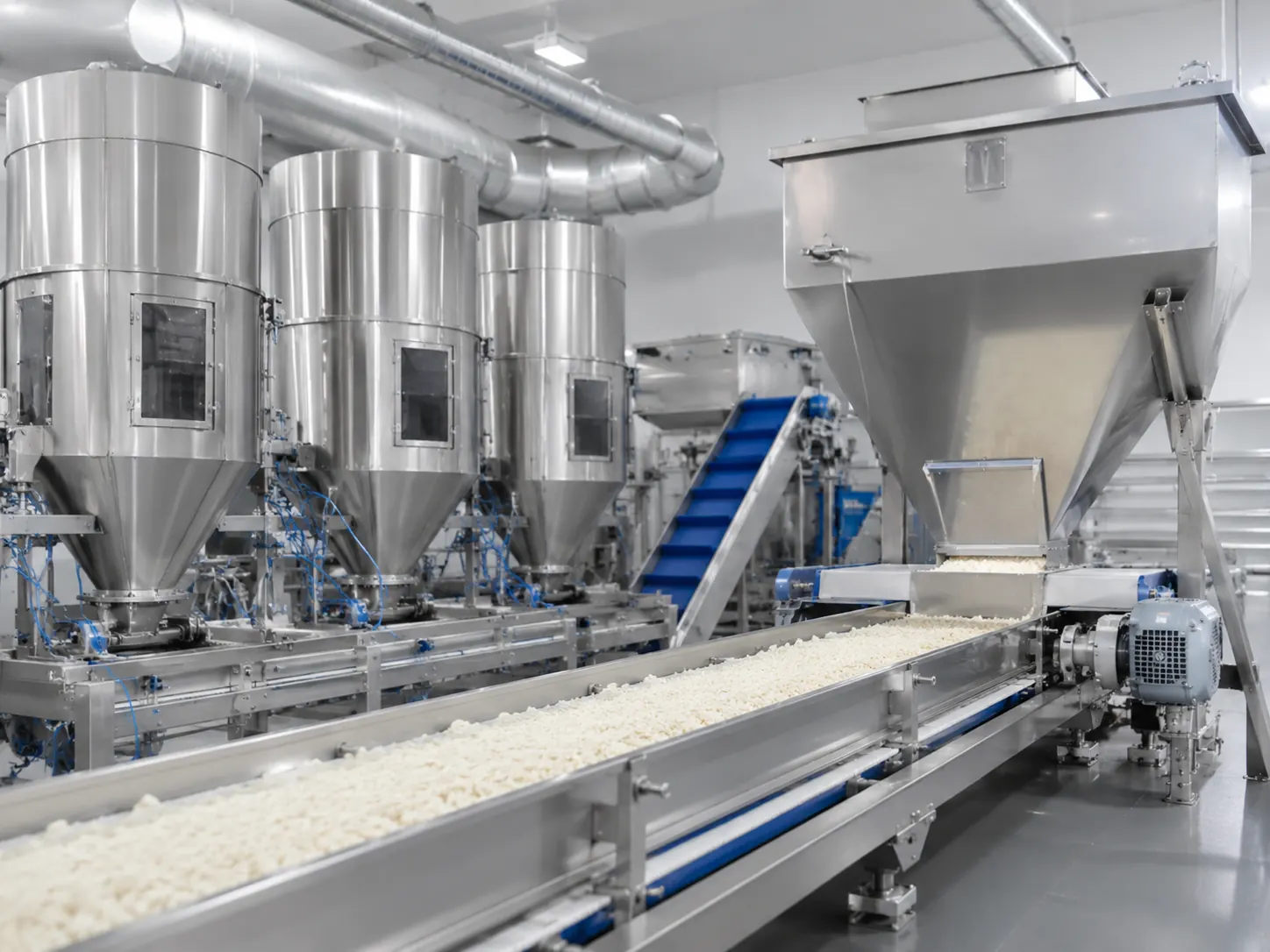
Stainless components, filters, magnets, valves, transitions and conveying packages where sanitation and contamination control matter.
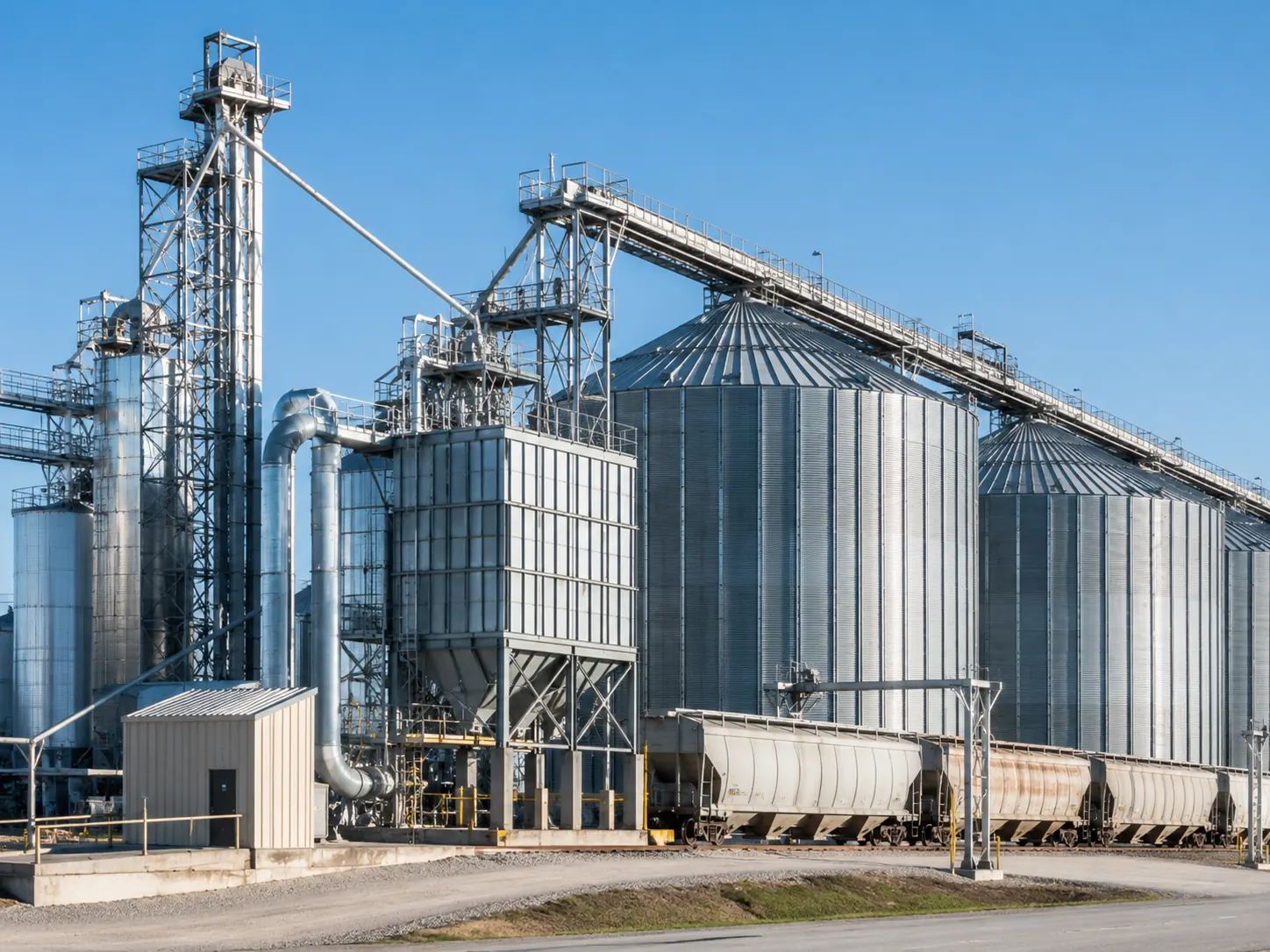
Gates, ducting, elbows, couplings, bin discharge parts, high/low level sensors, magnets and custom adapters for dry bulk handling.
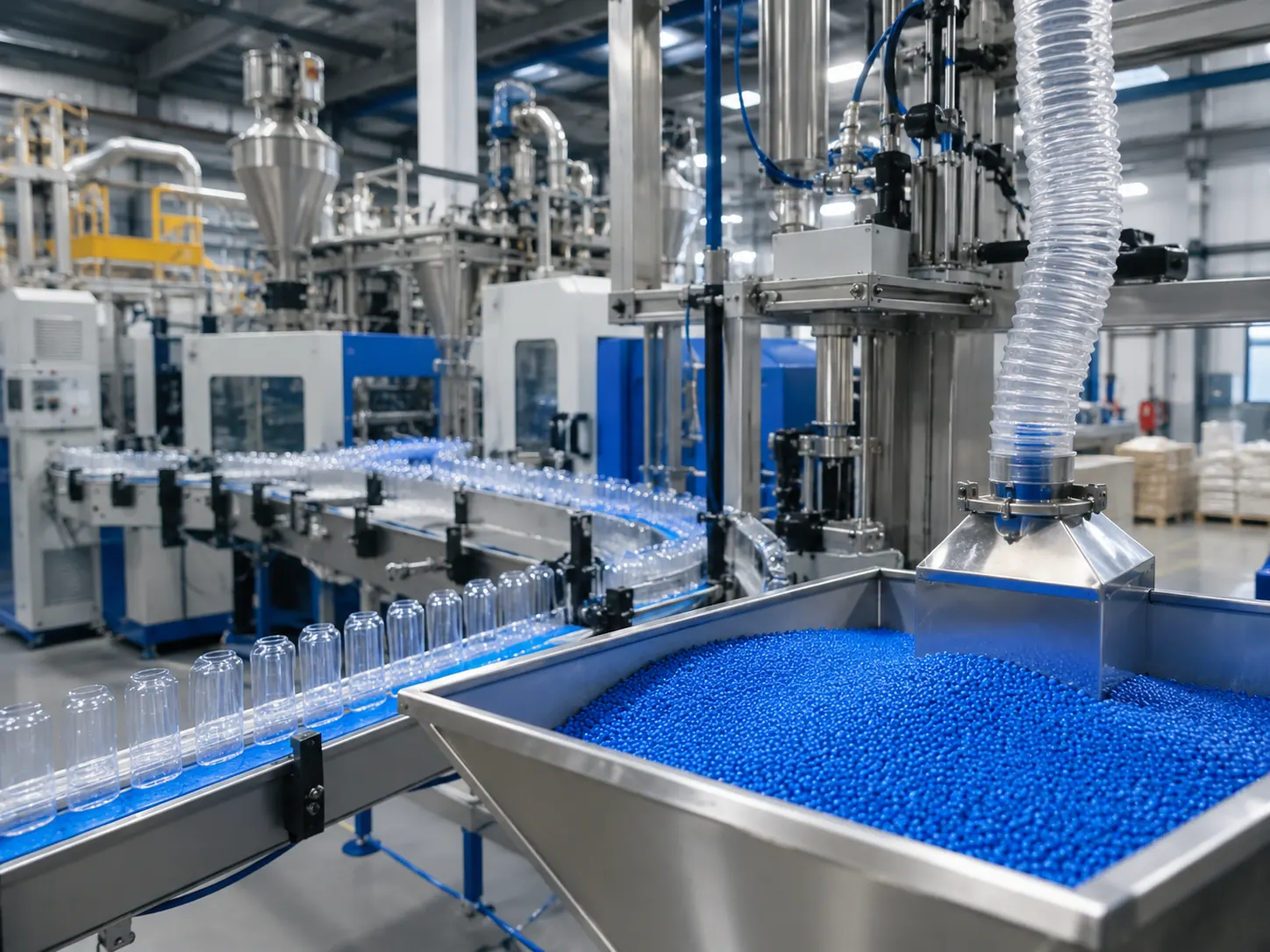
Conveying pipe, bends, couplings, diverters, access doors and line components for resin and pellet handling.
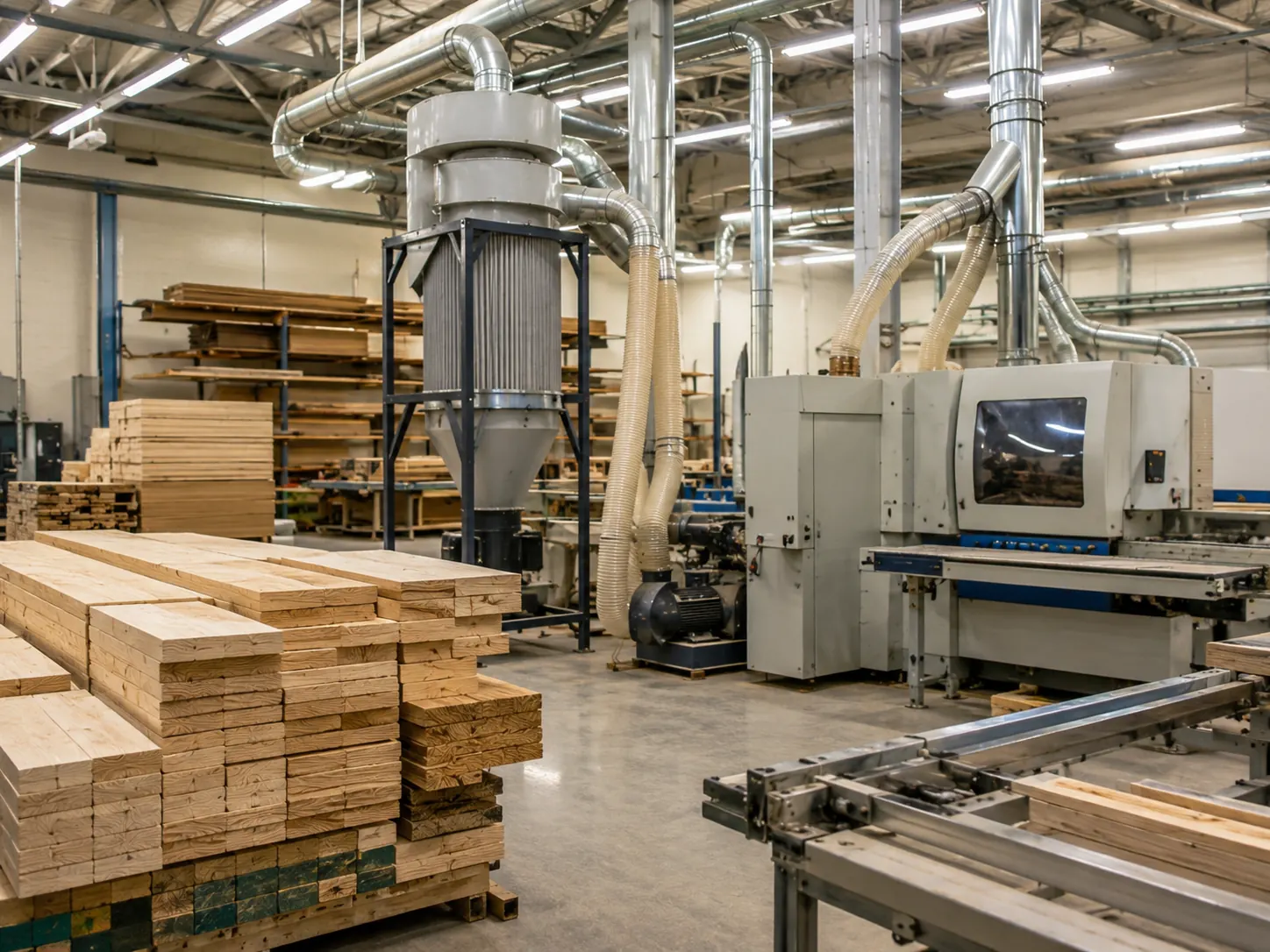
Spiral ductwork, blast gates, filters, clamps, elbows, branches and collector accessories.
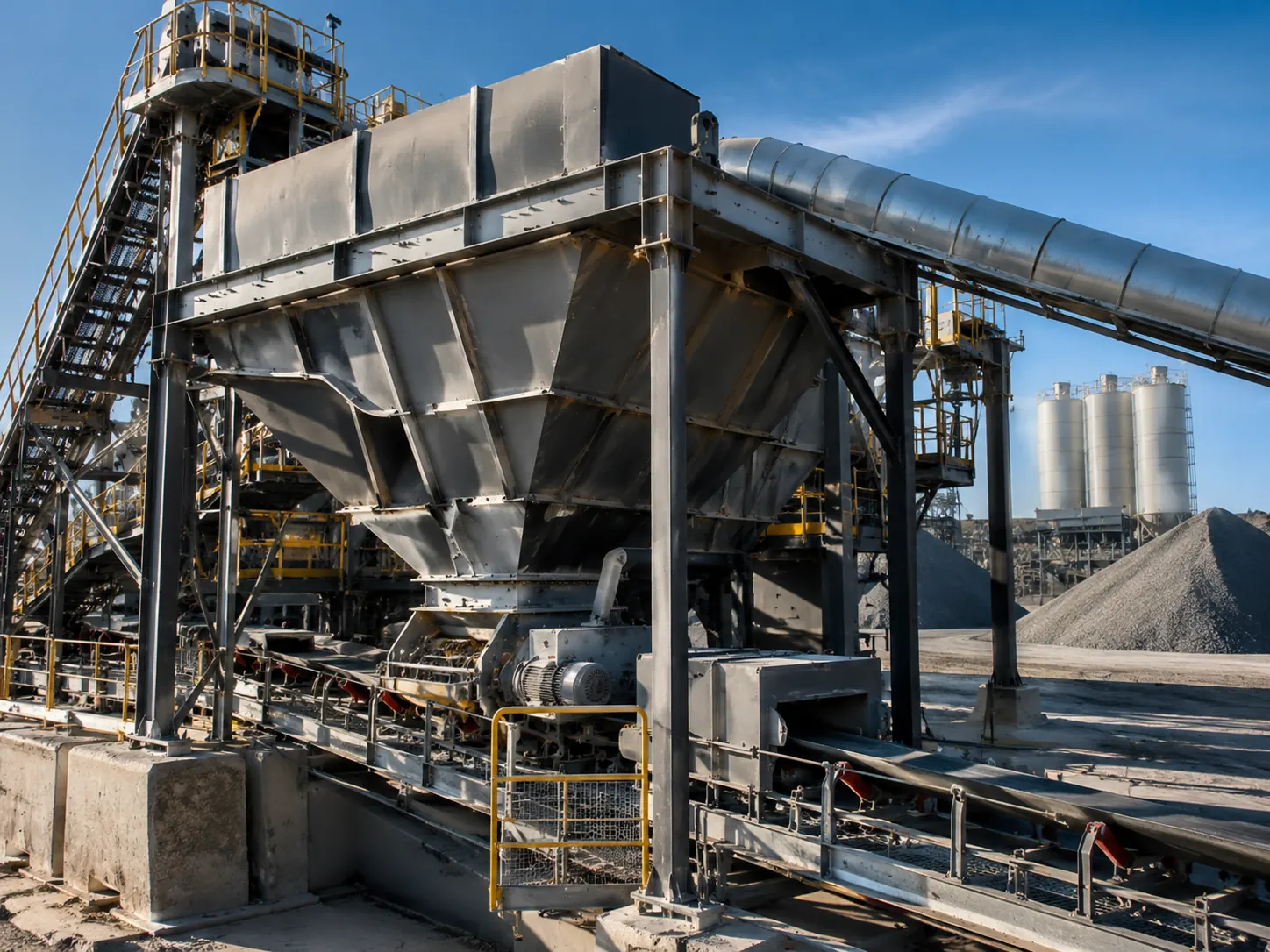
Abrasion-aware fittings, heavy-duty transitions, replacement components and project-specific equipment adapters.
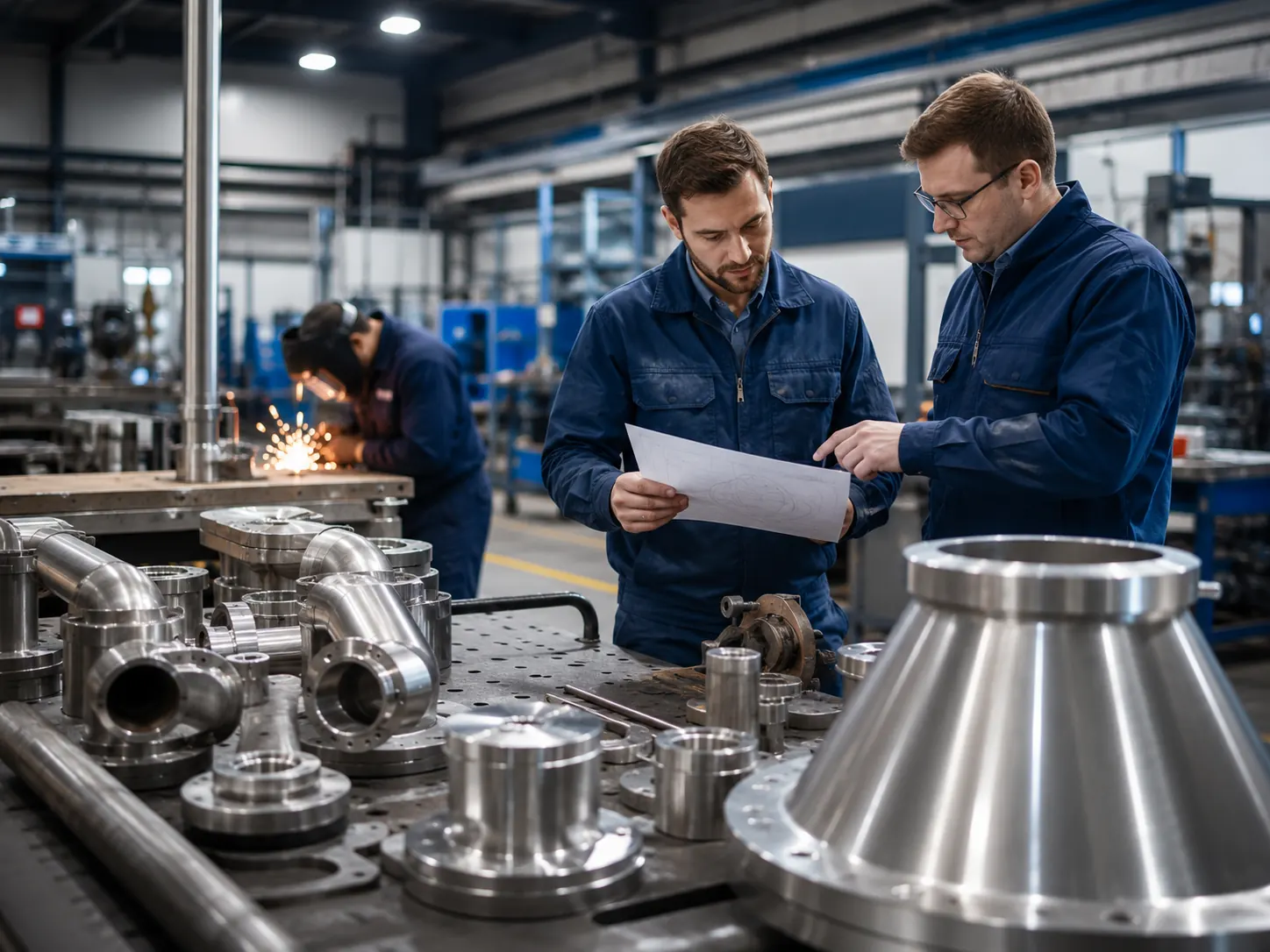
Component sourcing, fabricated fittings and coordinated quotations for maintenance work, projects and equipment packages.
Send a part number, photo, drawing or description, plus quantity and delivery location. Your quotation will identify the proposed product, pricing, available lead time and freight details.