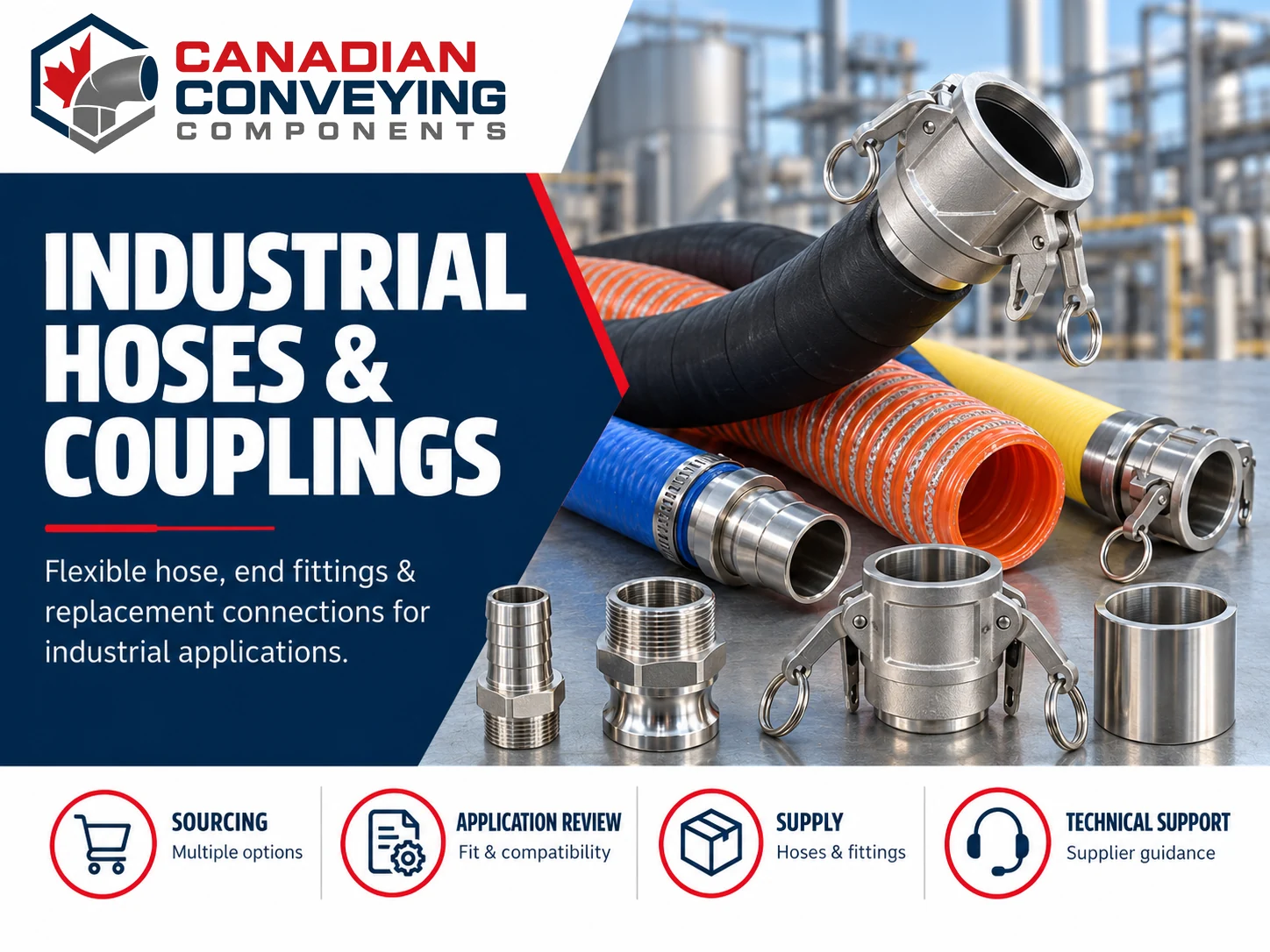
Can you source a hose using a photo or an existing part number?
Yes, a clear photo of the printing or tagging on the hose and both end fittings can be a useful starting point. We can request supplier identification and options; actual availability, construction and compatibility must be confirmed in the quotation.
Do you offer complete hose assemblies or only loose parts?
We can coordinate inquiries for both separate hose and fittings and for complete assemblies manufactured by a qualified supplier. Assembly methods, pressure testing, documentation and other requirements should be specified before quotation.
Are all camlock couplings interchangeable?
No. Size, material, seal type, end connection, applicable coupling standard and intended service all matter. Similar-looking parts are not necessarily suitable replacements, particularly for hazardous, pressure-sensitive or high-temperature service.
Can I use the same hose for air, water, chemicals and bulk materials?
Not automatically. Hose construction must be selected for the specific conveyed media and service conditions. Abrasion, chemistry, static electricity, temperature and operating pressure can require different hose and coupling designs.
What if I need food-contact or certified hose?
Identify the applicable food-contact, sanitation, testing or other requirements. We can request manufacturer documentation for a suitable option where available, but no approval or certification is implied until confirmed in writing for the exact product and assembly.
How do I choose between an industrial hose and a flexible connector?
Industrial hoses are commonly used as transfer lines with dedicated end fittings. Flexible connectors and expansion joints may be used to accommodate movement, vibration or transitions between process equipment. The correct category depends on the duty, operating conditions and connection details.